
Share

New
1/8
About this product
Architonic ID: 20340717
Year of Launch: 2024
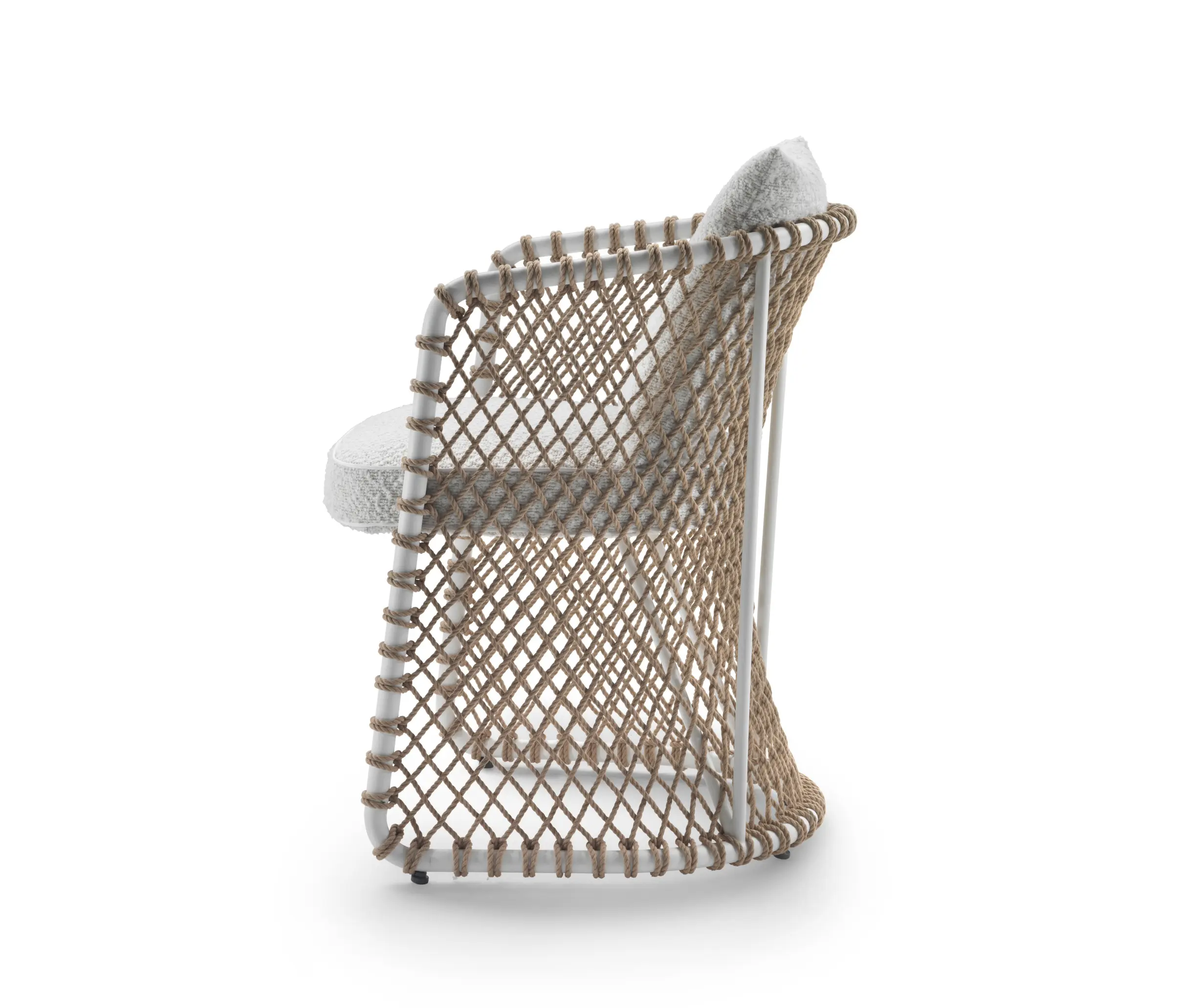
The aesthetic motif that defines the Oasis seating system is also found in the eponymous small armchairs.
Their originality lies in the epoxy powder-coated tubular metal base with entirely hand-woven polypropylene cord backrest.
The delicate woven mesh pattern and sinuous metal structure lend elegance and lightness to the design.
The Oasis family includes dining chairs and lounge chairs, both available in various finishes, designed and crafted to furnish outdoor spaces where not even the smallest detail is left to chance.
Concept
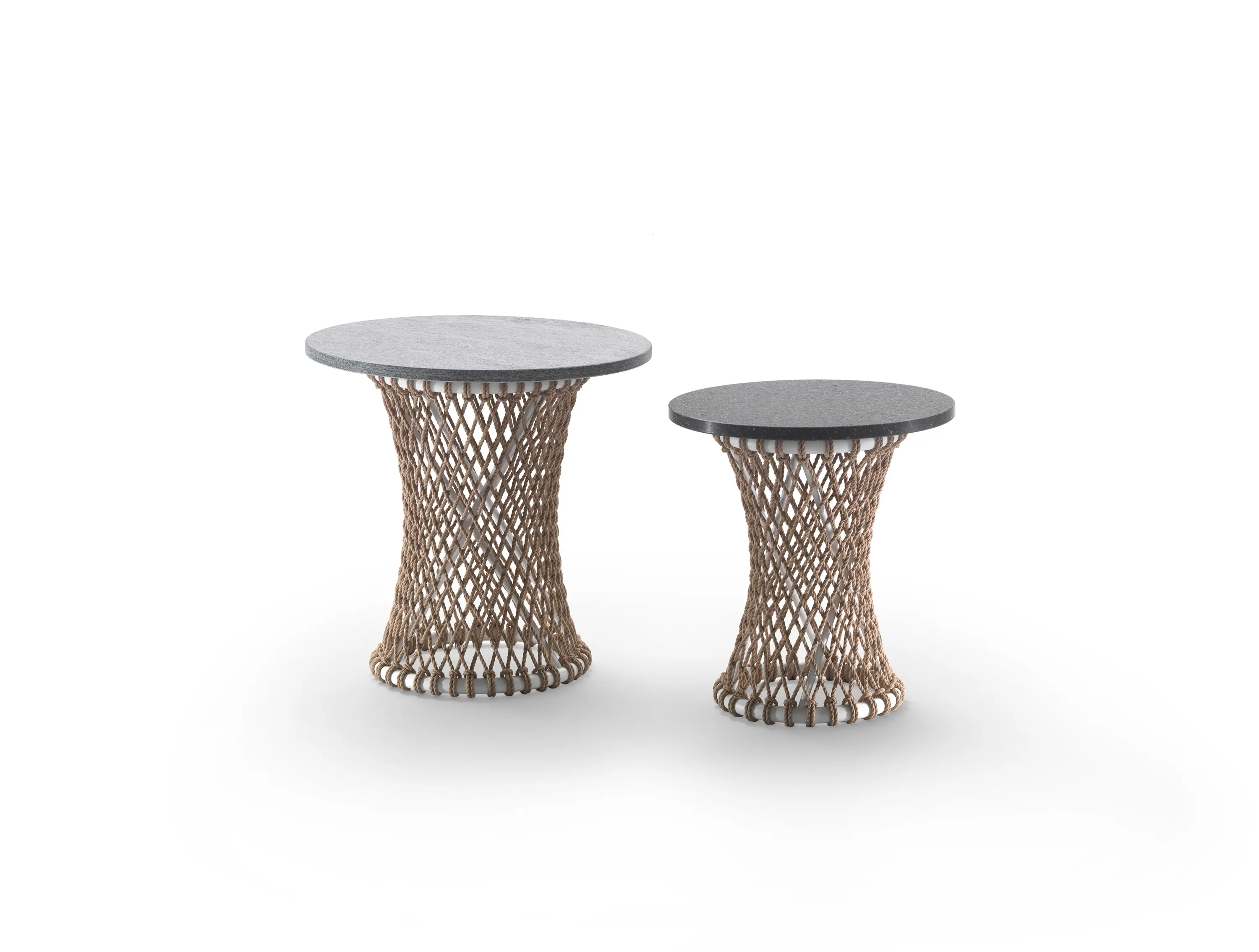
With its sinuous, enveloping lines, the Oasis seating system makes it possible to design furnishing solutions for outdoor settings that evoke a cozy, relaxing atmosphere. Its generous woven cord-and-metal backrest with a mesh-like pattern forms the aesthetic motif that lends bold personality to the Oasis sofa. The structure is in epoxy powder-coated tubular metal accompanied by entirely hand-woven polypropylene or rubber cord. Visually, the effect is that of a spacious basket that welcomes soft seat and backrest cushions – an invitation to abandon oneself to relaxation. The rich textile collection allows for unique pairings of the cushion upholstery options, coordinating the colors and textures in elegant combinations. The Oasis seating system offers the design flexibility to create configurations suited to more compact urban settings as well as larger outdoor spaces. If left unused for lengthy periods of time, it is recommended that the Oasis seating system be protected with its own covers to keep it in top condition and maintain its original appearance as long as possible. The aesthetic motif that defines the Oasis seating system is also found in the eponymous family of tables. Its originality lies in the epoxy powder-coated tubular metal base with entirely hand-woven polypropylene or rubber cord. The delicate woven mesh pattern, sinuous metal structure and tempered-glass top lend elegance and lightness to the design. The Oasis family comprises both dining tables and tray tables, available in various shapes, sizes and finishes, designed to furnish outdoor spaces curated down to the smallest detail.


Specifications
Material
Base metal, Base plastic, Metal, Plastic, Textile
Design files
14
Distributors
Designers

Antonio Citterio
Italy
Antonio Citterio was born in Meda in 1950. He graduated in architecture from Milan Polytechnic and opened his studio in 1972 where he started his architectural and interior design business. Between 1987 and 1996 he worked in association with Terry Dwan and, together, they created buildings in Europe and Japan. Among his most significant works: the restyling of a block in the historical centre of Seregno, Esprit headquarters in Amsterdam, Antwerp and Milan, industrial plants for Vitra, in Germany, and for Antonio Fusco, in Milan. In 1999 “Antonio Citterio and Partners” was founded by Citterio and Patricia Viel, a multidisciplinary practice for architectural design, industrial design and graphics. Patricia Viel was born in Milano in 1962. She graduated in architecture from Milan Polytechnic in 1987 and she started her collaboration with Antonio Citterio in 1986. From 2005 she is member of the National Institute of Architecture IN/ARCH. The firm develops projects for residential complexes, apartment buildings, hotels, trade centres, industrial sites, restructuring of public buildings, planning of workspace, offices and showrooms; it is also operational in the field of corporate communication - implementing corporate image projects, fittings, graphics. From January 2007 the firm is UNI EN ISO 9001:2000 certified. In the field of industrial design Antonio Citterio works for Italian and foreign companies such as Ansorg, Arclinea, Axor-Hansgrohe, Aubrilam, B&B Italia, Flexform, Flos, Fusital, Guzzini, Iittala, Inda, Kartell, Maxalto, Sanitec Group - Pozzi Ginori, Simon Urmet, Technogym, Tre Più, Vitra. In 2000 the new headquarters opened in Milan, Via Cerva 4, and in May of that same year new offices were opened in Hamburg, 75b Wrangelstrasse. In 2002 the construction of the building where the headquarters of the Edel Company are located, along the Elba river, was completed as well as an office building in Neuerwall, two constructions for offices and textile manufacturing in Legnano and Lecco and the headquarters of the CR&S Centre completed with showroom and offices for B&B Italia in Novedrate. Between 2003 and 2004, a corporate image project was implemented for De Beers (London and Tokyo) and, in May 2004, the Bulgari Hotel was inaugurated in Milan, the first of a chain of luxury hotels known as “Bulgari Hotels and Resorts”. In 2005 the restructuring of the historical Town Hall of Clusone, the project for the headquarters and nursery of the drug company GlaxoSmithKline in Verona, the project for a law firm in Sondrio, Italy were completed; added to this two projects for private house, one in Basel, Switzerland, the other in Sardinia, Italy and the jewellery De Beers in Los Angeles. In September 2006 has been inaugurated the Bulgari Resort in Bali, the Aspesi showroom in Milan and the pedestrian square “Michele Alboreto” in Rozzano. In 2007 the Bulgari restaurant and cafè opened in Tokyo, Ginza district. In January 2008 was completed the building for the New Ermenegildo Zegna Headquarters. The project for the new “Technogym Village” in Cesena (production site, offices and trade centre), a new square in Busto Arsizio; the functional restructuring, furniture and security of the Southern Pier in Marina di Ravenna, the renovation of the urban ex-Martinelli area in Morbegno, all in Italy, master planning and private houses are underway. Antonio Citterio and Partners took part in a great number of international competitions. In 2004: project in cooperation with other architects to change the historical centre of Fiera Milano into a new urban centre; project for the building of the “Brooktorhafen” bridge in the new “Hafencity” district in Hamburg; project to enlarge a new multifunctional school building and a kindergarten for the Deutsche School in Milan. In the same year, together with other architects, he won the competition for the functional arrangement, street furniture and security systems of Molo Guardiano sud / Marina di Ravenna, which was presented on the occasion of the 9th International Exhibition of Architecture of the Biennale of Venice, section “Towns on Water”. In the year 2004, publishing company Electa launched the monography “Antonio Citterio Industrial design”. In 2005, Antonio Citterio and Partners won the competition for the project of an hotel in the Hafencity district in Hamburg and received the 2nd prize at the international design competition for the hotel facilities in the new exhibition grounds of Rho-Pero. In the same year the Neumühlen project receives the 2nd prize from the Hamburg Architektur Preis and a special mention from the Deutscher Architektur Preis. Still in 2005, written by Luigi Prestinenza Pugliesi and published by Edilstampa, the monography “Antonio Citterio” has been issued. In the same year, he received 2nd prize at the design competition for Parco Levante Cesenatico and wins the international architectural competition for the renovation of the Ferrante Aporti building (former Italian post office) in Milan. In 2007: the Mies van der Rohe Award jury selects the project for the GlaxoSmithKline day nursery in Verona; the Italian publishing house Skira issued the monograph “Antonio Citterio. Architettura e Design”; 2nd prize at the international design competition for the Diocesano Museum in Milan. From 2006, Antonio Citterio is professor at the Accademia di Architettura dell’Università della Svizzera Italiana and from 2007 he is member of the Italian Design Council. In 2007 he received the “Royal Designer for Industry” award from the “Royal Society for the encouragement of Arts, Manufactures & Commerce” in London.


