


Contact details
Send a message
Call us
Distributors


Help me find it
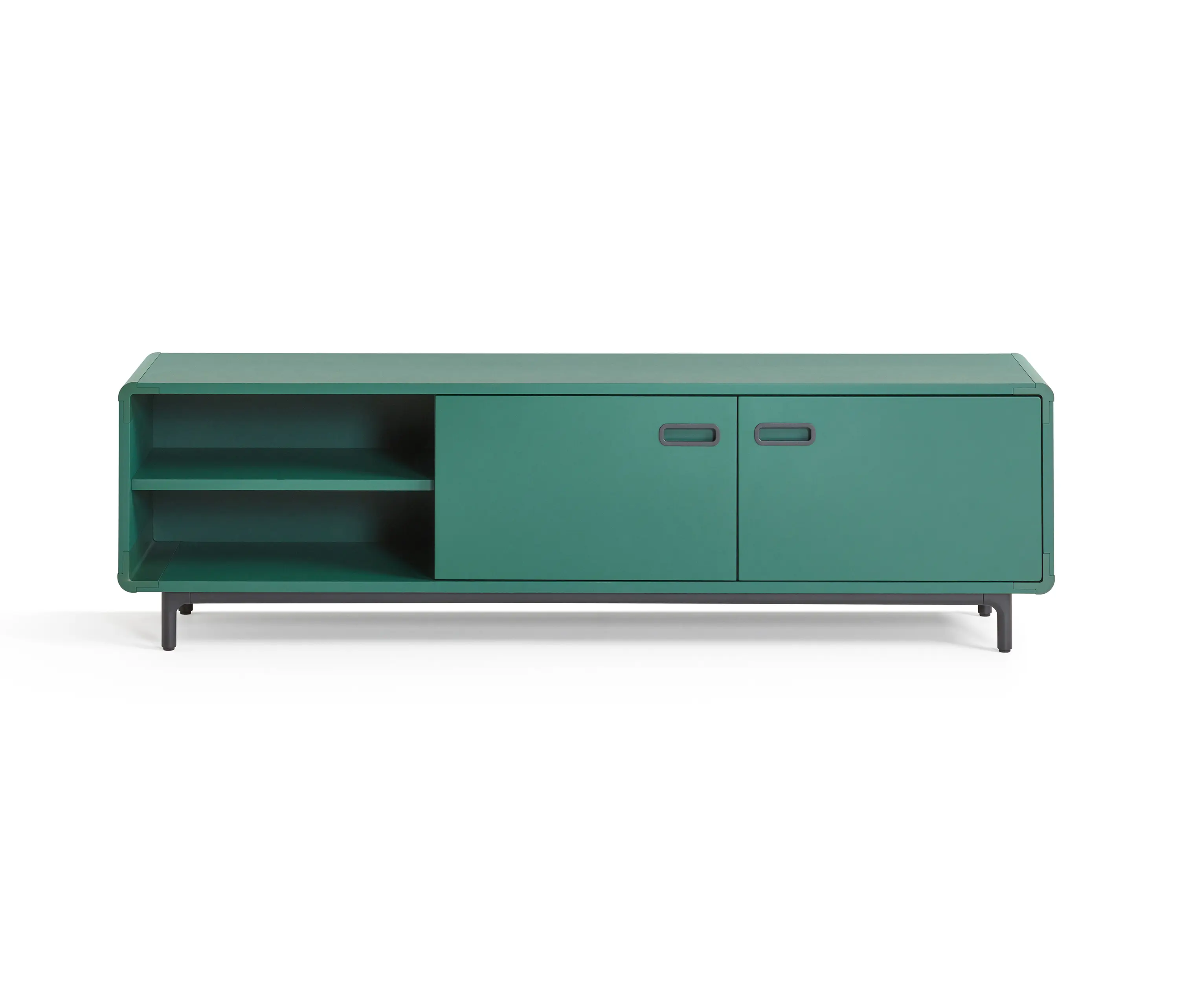
Extens | Dressoir Low
Architonic ID: 1462861
Year of Launch: 2004
Extens collection
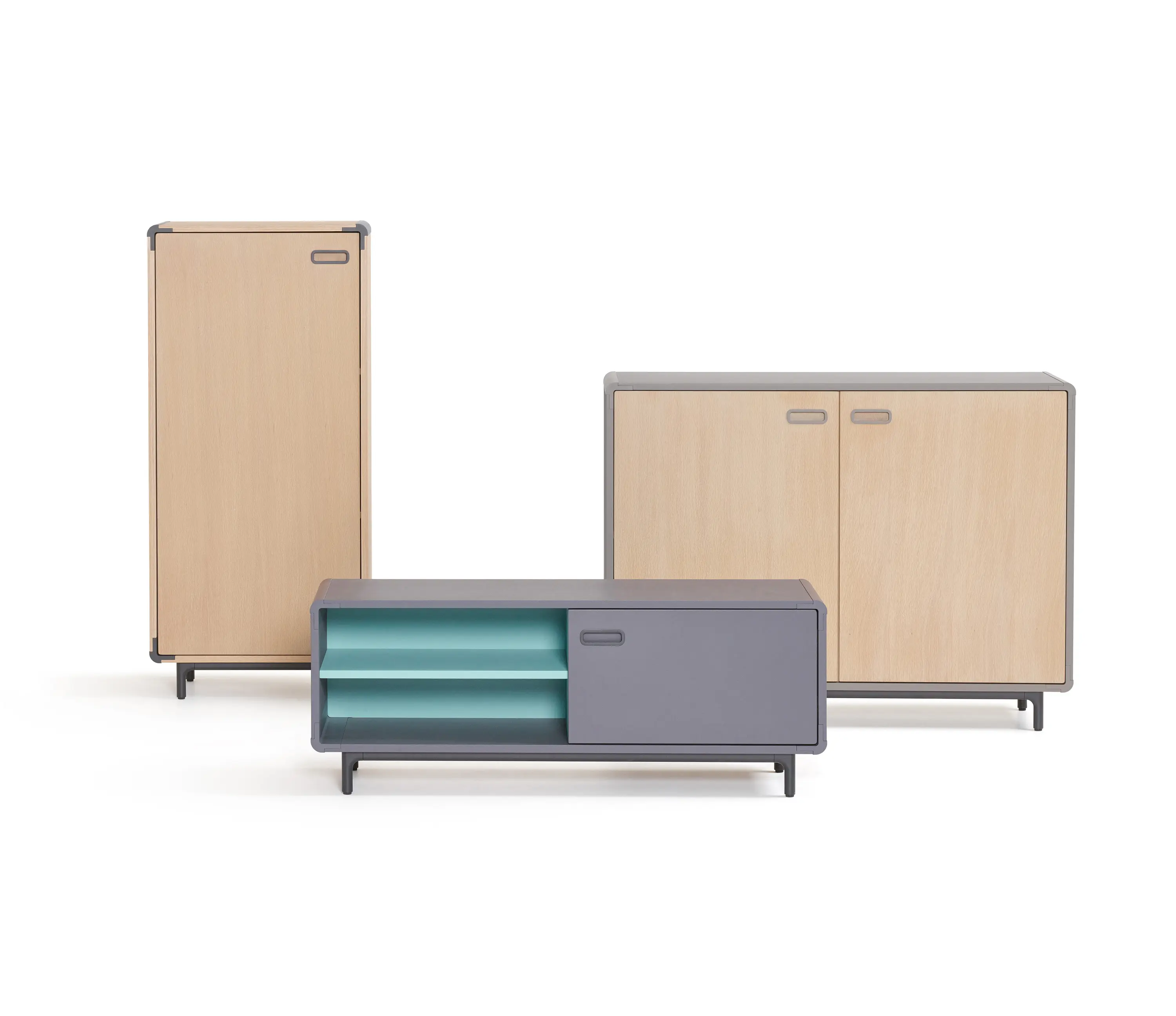
Choose from three cabinet heights: Extens high, Extens medium, or Extens low. Each Extens offers multiple configurations.
Cabinet doors
Choose no, one, or multiple cabinet doors per Extens cabinet. Optionally, a lock can be added to a cabinet door.
Finishes wooden panels
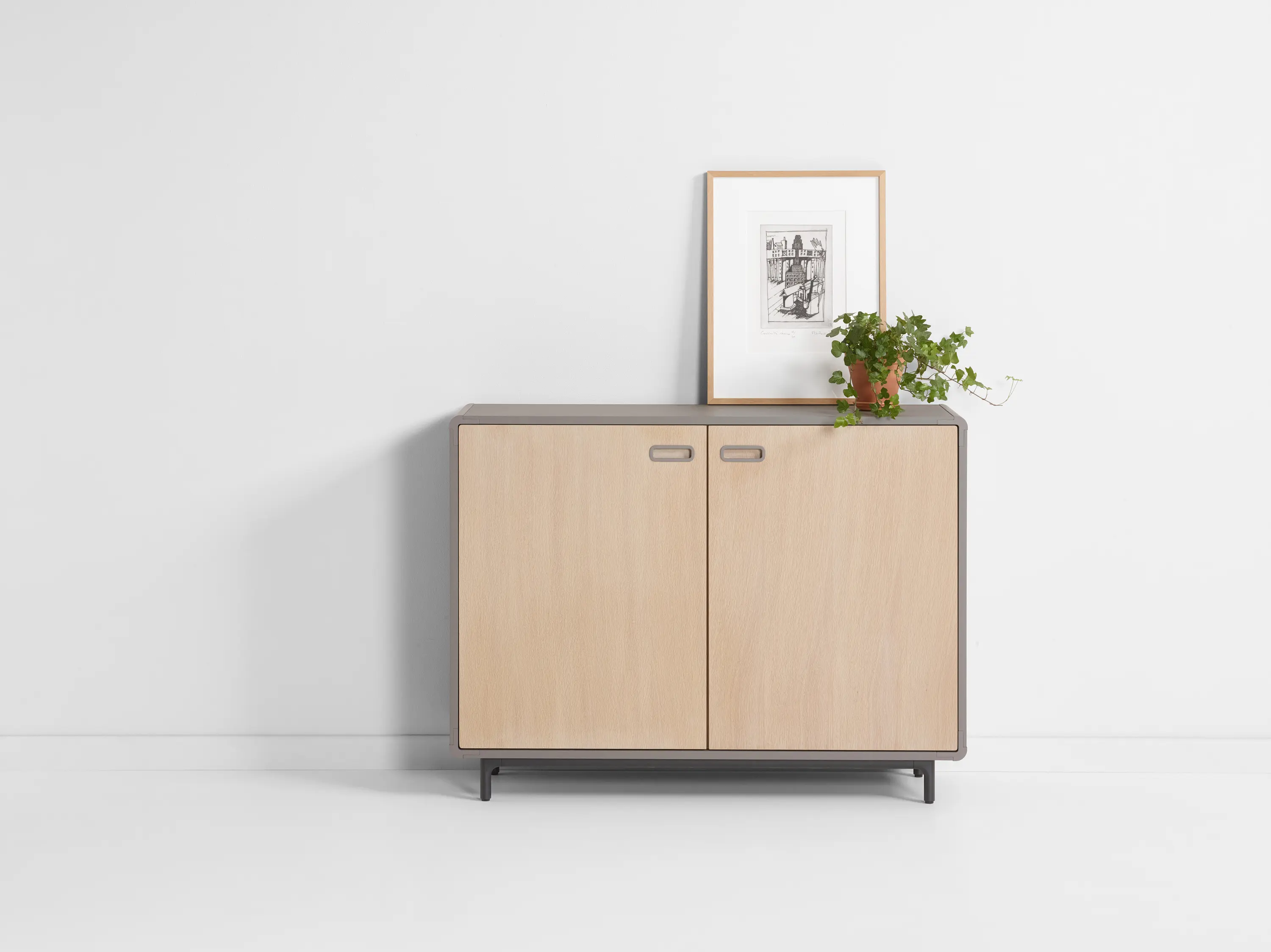
The wooden panels are finished with transparent lacquer, oiled, or coloured lacquer. For a playful effect, the wooden panels within one cabinet can differ in colour.
Finishes aluminium corner profiles
The aluminium corner profiles, base, and handles are finished in powder coat (fine texture). Choice of more than fourty colours.
Concept
The iconic Extens cabinet program, with its striking aluminium corner elements, has been updated by designer Khodi Feiz. Based on today’s lifestyle needs and aspirations. Extens now has compact, sleeker dimensions and the cabinets can be finished in a wide variety of powder-coating, lacquer and veneer options from the Artifort collection.
‘I designed the Extens construction principle in 2004’, Feiz explains. ‘It is based on using advanced gluing techniques. This bonds the aluminum corner elements to wooden panels creating a unique appearance and strong construction. The new assortment of finishing’s give Extens a completely different look meeting today’s trends’.
With its numerous variations both in configurations and in finishing, Extens suits any office or home.
Construction
The Extens program is made of 18 mm MDF wood panels to be finished in veneer, matt structure lacquer or a combination of veneer and lacquer. All aluminum parts like legs, base and grips are powder coated in the colour of your choice from the Artifort structure powder-coat collection.
This product belongs to collection:
Aluminium, Base metal, Metal, Structure engineered wood, Wood
Textile
Engineered wood

Netherlands
A design consultancy with an integrated and multi-disciplinary approach, Feiz Design Studio handles all areas of design from brand building products to inspiring furniture; technically sophisticated industrial projects to household and consumer products. The overriding inspirations for our work can be summed up by: clarity, concept and context. Clarity: objects which are stripped down to their bare essence, not to make them boring, but to bring out their main expressive quality. Too often ‘simple’ projects are dismissed as superficial and banal; it seems the more ‘complex’ or ‘advanced’ the better. But we propose the opposite: the simpler the project the more challenging and difficult it becomes; you don’t have the guise of complication to hide behind. Concept: it is the idea that gives meaning to an object; when a piece captures your imagination or makes you look twice. It is from new concepts which new typologies emerge. Context: to be inspired by the environment you are designing for is a very strong starting point. Often not thinking of the object but of the context that creates the object can lead to new and surprising results. We believe that design is a generalist act. That is not to say that the designer is a jack of all trades and a master of none, but to be able to contribute creatively is a specialism in itself, whatever the realm; be it strategic, helping create future scenarios and propositions for culture and society; formal, designing relevant and beautiful products for our use; technical, helping industry innovate; communicative, making information and services understandable; or artistic, producing work which questions and inspires. These and many more elements constitute the world of design, and it has never been any different. It is within this context that we would like to develop and work with industry to achieve quality, whatever form it may take. Because, to us, quality is the obligation, design the inspiration. Biography Khodi Feiz, (1963) industrial designer, born in Iran and raised in the US, received his degree at the Syracuse University (NY) and worked for companies such as Texas Instruments and at the Industrial Design Center at Philips Electronics in the Netherlands. He set up Feiz Design Studio with graphic designer Anneko Feiz - van Dorssen in 1998. The main inspirations for Feiz's work can be summed up in three words: clarity, concept, and context. Feiz is an industrial designer working across a broad spectrum of design disciplines, including products, furniture, strategic design, new concepts, and interior and exhibition design. He received many awards and prizes and his work is exhibited worldwide. Khodi Feiz works for Alessi, Artifort, Bang & Olufsen, Cappellini, Decathlon, EMI Music, Kembo, Loewe, LEGO, Lost Boys, Leitmotiv, Nokia and Offecct.