Share
1/7
- Home/Bar stools/
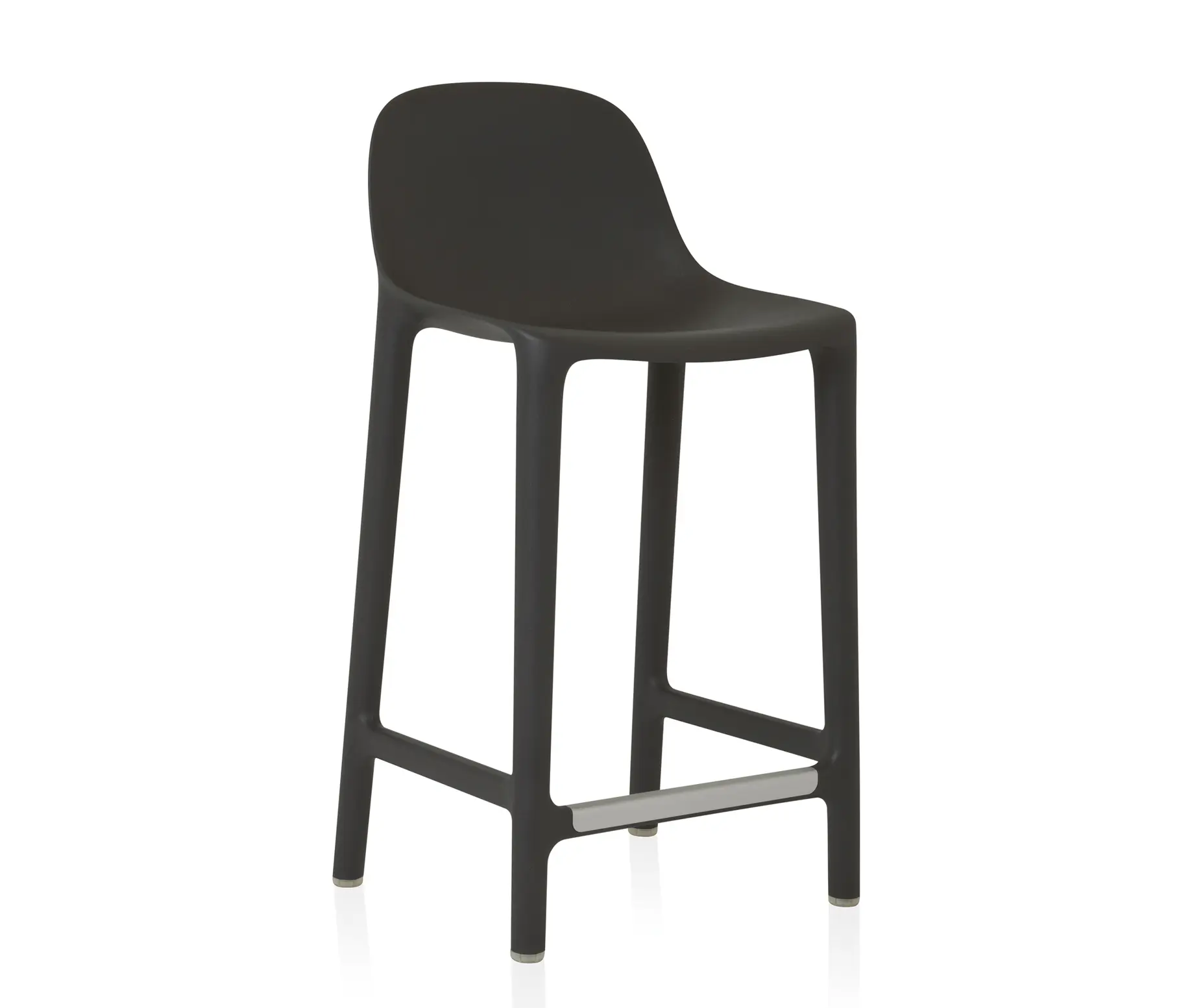
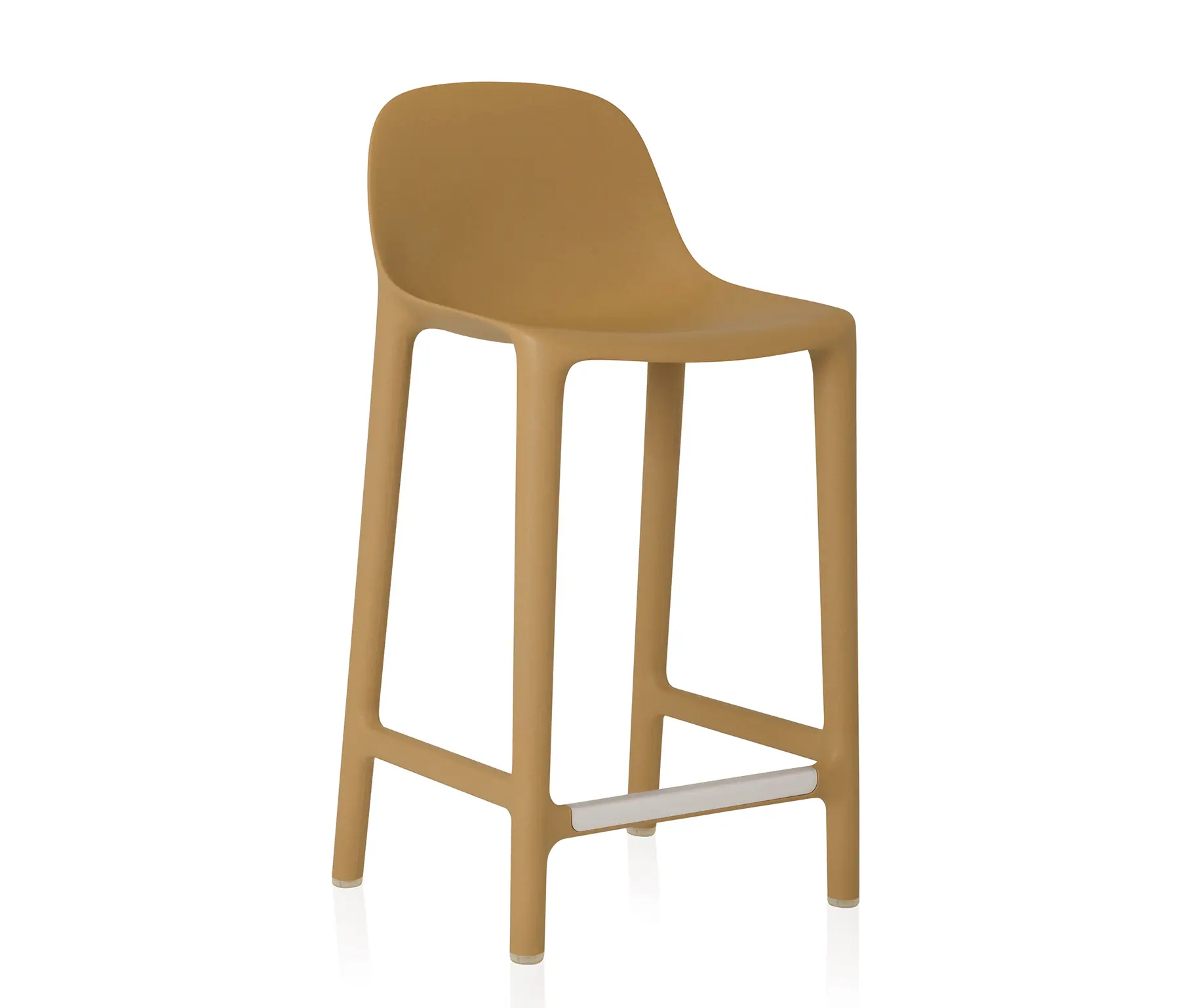
Broom 24 Counter stool
About this product
Architonic ID: 1345925
Year of Launch: 2014
W: 43cm
D: 41cm
H: 85cm
SH: 61cm
Concept
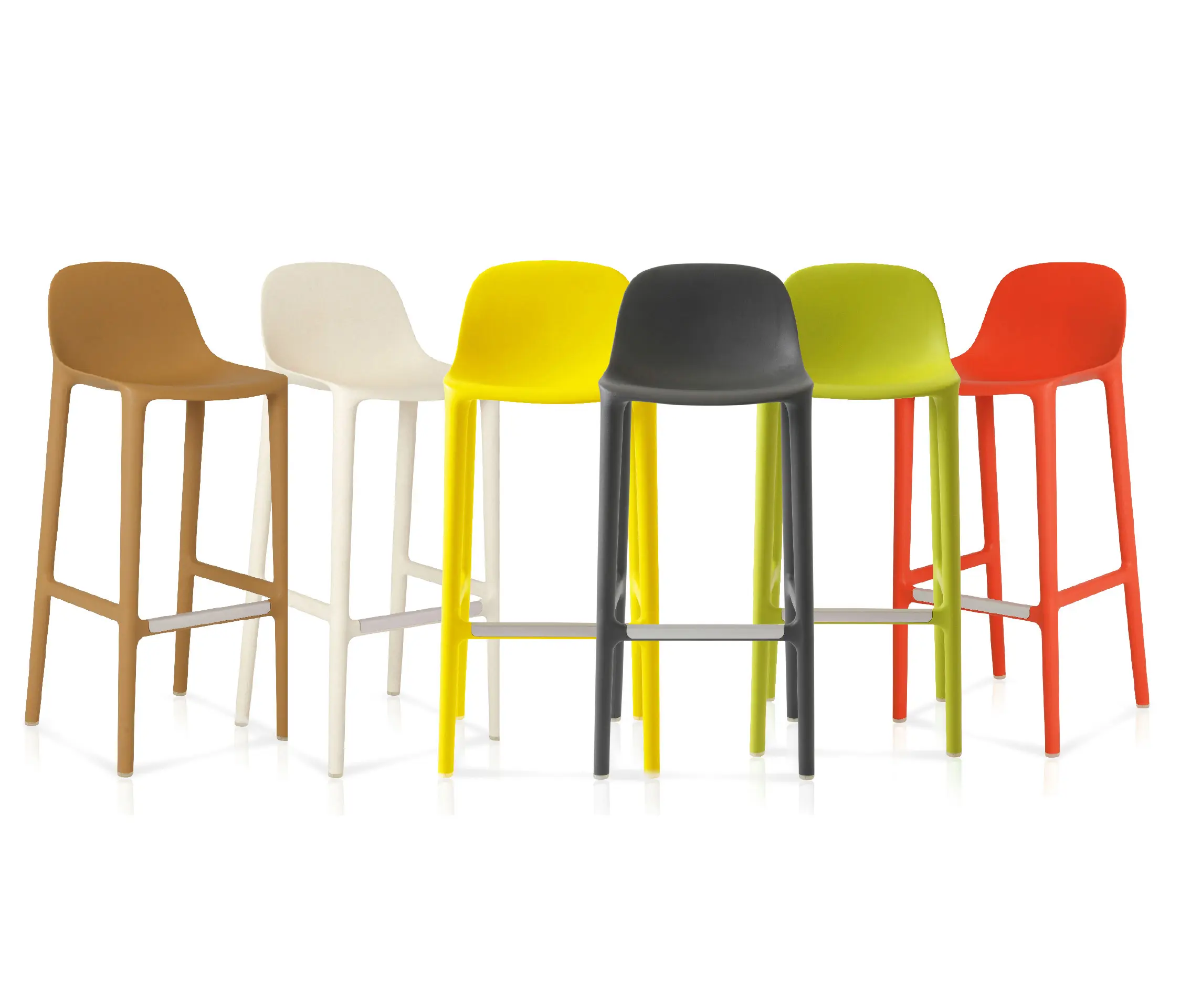
Philippe Starck and Emeco came together to create a new collection that is reclaimed, repurposed, recyclable – and designed to last. The counter stool and the chair is made from 75% waste polypropylene and 15% reclaimed wood that would normally be swept into the trash, “Imagine”, says Philippe Starck, “a guy who takes a humble broom and starts to clean the workshop and with this dust he makes new magic”. That’s why we call it Broom.
Answering customer demand, Emeco and Philippe Starck have created Broom Stools, made of 90% industrial waste.
The Broom Stools are available in the same colors as Broom Chair, green, orange, white, yellow, dark grey and natural.
“As we worked with Starck to design the Broom Barstool we kept in mind the limited space at a bar in a restaurant or hotel. We reduced the seat width while maintaining the comfort. Like its ancestor the Broom Chair, the Broom Barstool is more than just a “mono-block” stool. Through the use of waste materials, technology ensuring excellent quality with a long life, and energy conservation in production and transportation, we created an eco-friendly, people-friendly and sustainable “mono-block” chair and stool collection.”
- Magnus Breitling, Vice President of Product, Emeco
Frame Material: Reclaimed WPP
Frame Finish:
DARK GREY
GREEN
NATURAL
ORANGE
WHITE
YELLOW
This product belongs to collection:

Specifications
Material
Base plastic, Seat plastic
Design files
3
Distributors
Designers

Philippe Starck
France
"I like to open the doors to people's brain." - Philippe Starck Whenever we discover an object or a place designed by Philippe Starck, we enter a world of walltowall imagination, surprises and fabulous fantasy. For more than three decades, this unique and multifarious creator, designer and architect has been a part of our daily lives by creating unconventional objects, whose purpose is to be "good" before being beautiful; iconic destinations, that take the members of his "cultural tribe" out of themselves and, most importantly, towards something better. His father, an inventor and aeronautic engineer, gave the young Philippe Starck the desire to create and the capacity to dream. Several years and several prototypes later, he was commissioned to work for President François Mitterrand. This was also when he began designing furniture for leading Italian and international firms. Philippe Starck designs his hotels and restaurants in the same way a director makes a film. He develops scenarios that will lift people out of the everyday and into an imaginative and creative mental world. His hotels have become timeless icons and have added a new dimension to global cityscape. Through Philippe Starck’s concept of "democratic design" – increase the quality objects at lower prices so that more people can enjoy the best – he was a lone voice at a time when design was turned exclusively towards an elite. There are few areas of design he hasn't explored: from furniture to mail-order homes, motorbikes to mega-yachts, and even artistic direction for space-travel projects, to name but a few. Philippe Starck believed in the green long before ecology became fashionable, out of respect for the planet's future. Early on, he created the Good Goods catalogue of non-products for nonconsumers in tomorrow's moral market, and set up his own organic food company. More recently he developed the revolutionary concept of "democratic ecology" by creating affordable wind turbines for the home, soon to be followed by solar-powered boats and hydrogen cars. Philippe Starck is a tireless and rebellious citizen of the world who considers it his duty to share his ethical and subversive vision of a fairer world. He stays tuned in to our dreams, desires and needs - sometimes before we get there ourselves - by making his work a political and civic act which he accomplishes with love, poetry and humour. Text: Jasper Eder