Share
1/20


Cloud-10 LED
Help me find it
- Home/Free-standing lights/
Cloud-10 LED
About this product
Architonic ID: 1420802
Year of Launch: 2016
Standing light
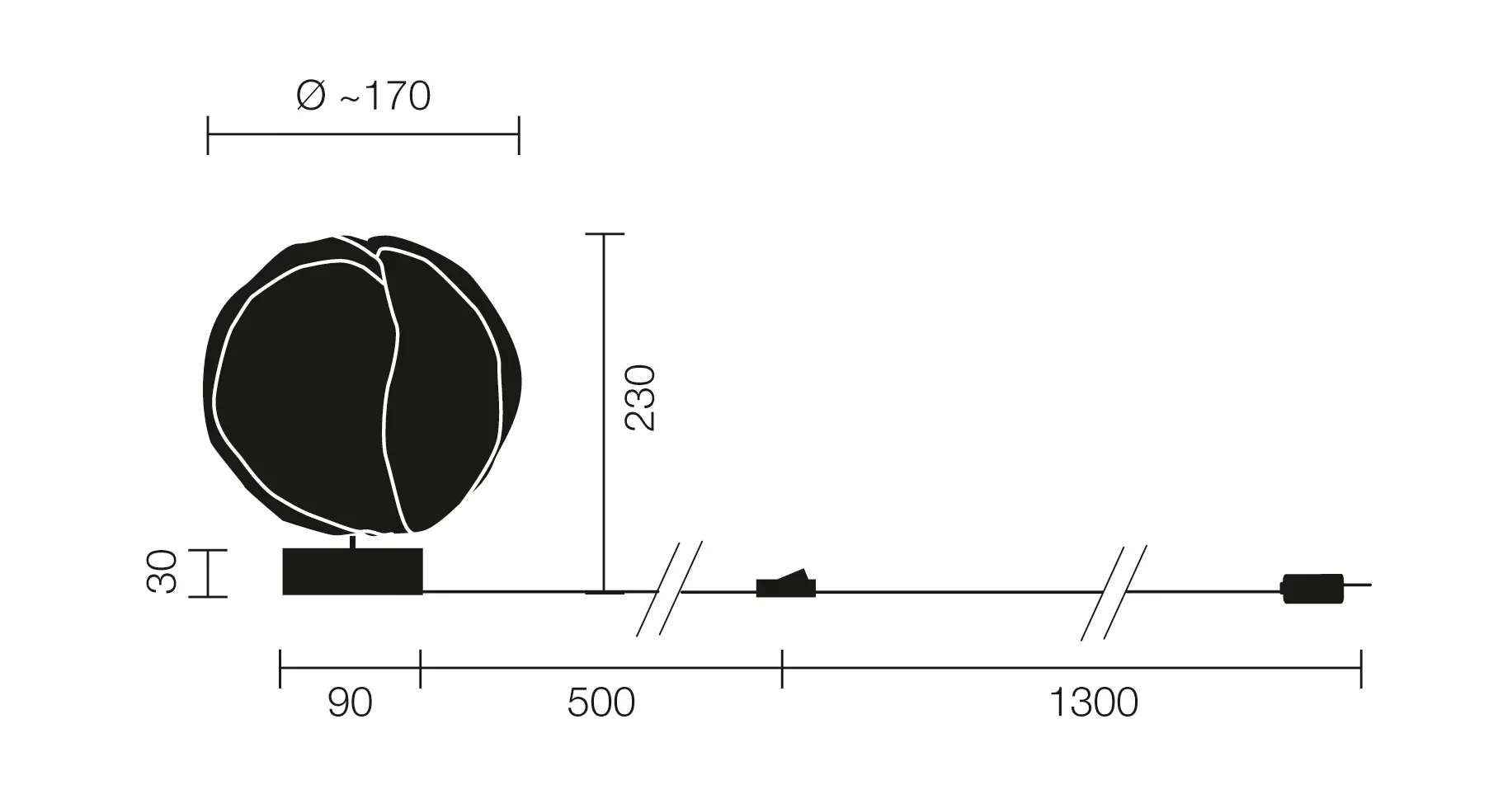
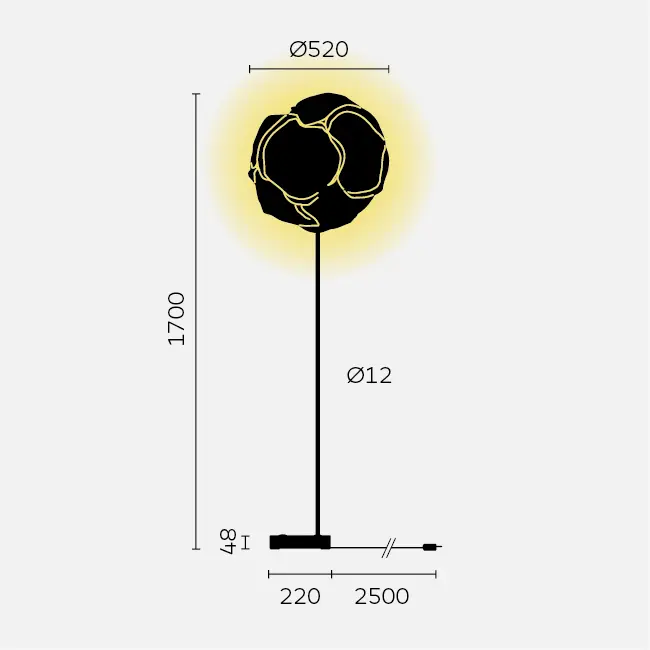
Size: H 1700 mm
Light source: LED
Colour temperature: 2700 K / 3000 K / 4000 K
Colour rendering index: CRI > 80
Chromaticity tolerance (initial MacAdam): 3 SDCM
Operating mode: Dimmable; Operation: At the base
Ballast (number): DALI converter (1), integrated in luminaire
Lamp shade: Polyester fleece
Tube: Stainless steel, fine-grain polished
Base: White alu, matt, wet-painted
Power cable: Transparent, 2 x 0.75mm², L 2500 mm
Mains plug: Euro CEE7/16 (type C)
Light distribution: Diffuse; Total luminous flux of luminaire: 4200 lm @ 4000 K
Power consumption: 37 W
Luminaire efficacy: 114 lm/W
LED service life: 50 000 h (L80/F10)
Rated voltage: 220-240V, 50Hz
Stand-by consumption: < 0.5W
Safety class: II
Protection type: IP 20
Concept
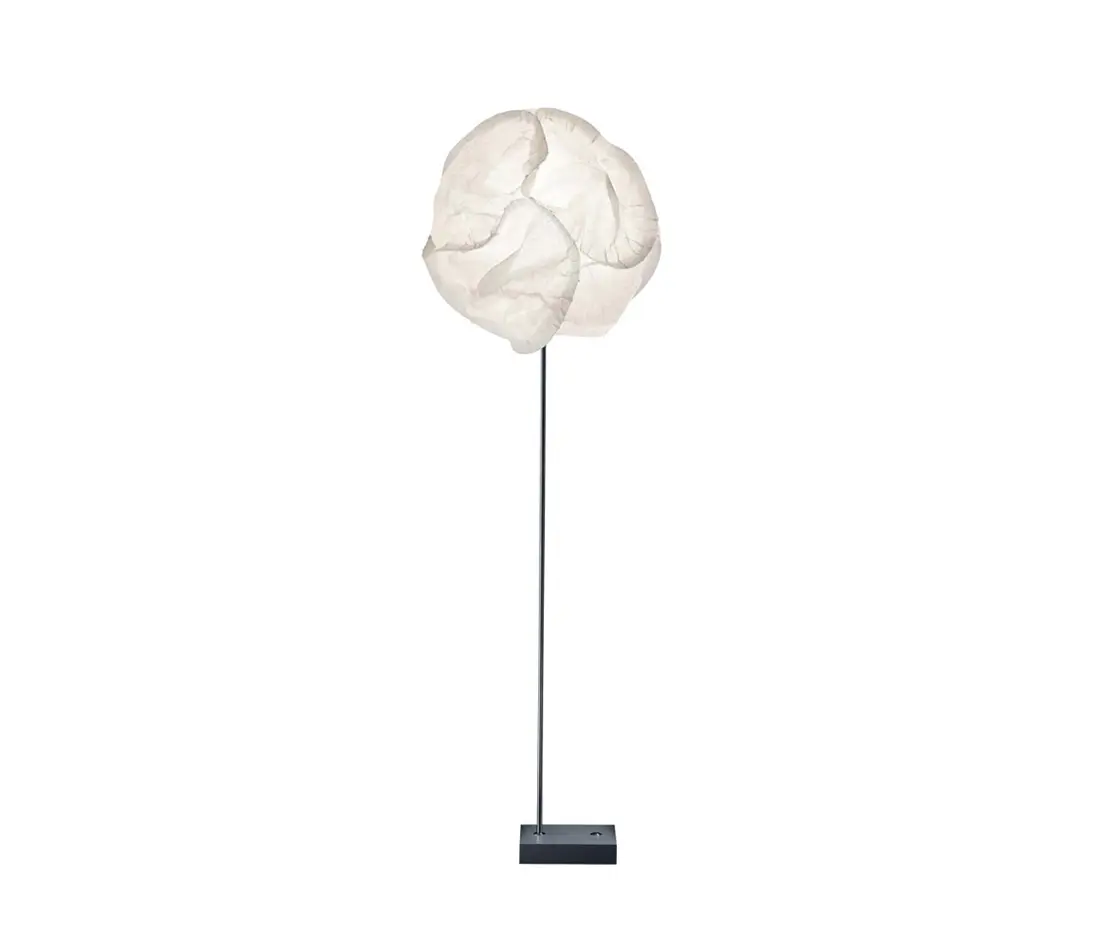
The name alone – Cloud – evokes the poetic nature of these creations, which, according to their maker, should convey ‘the feeling of freedom and eccentricity’. The lamps are available in various sizes and models. Each lamp has a voluminous yet delicate paper-like shade, in the centre of which is the invisible light source. With its irregular sculptural shape, marked by countless folds, crimps, bulges and dents, it suggests a fleecy Cloud and then again a large, soft snowball. Looked at more closely, the lampshade consists of several interlinked cup-like elements. Each lamp has an individual note in spite of all lamps having the same structure and the same predetermined shape. The idea is that the fold structure of the shade, which is shaped more or less by accident during production, can be changed by bulging it out or pressing it in. In doing so, Gehry makes users into co-designers who can repeatedly change the shape of the lamp if they so wish.
Light has always been one of the central themes in the work of the American architect Frank O. Gehry, winner of the Pritzker prize and one of today’s most distinguished designers. From the late 1960s onwards, Gehry has consistently created innovative lighting concepts and designed light objects for his manifold construction projects. Apart from experiments with ‘Colorcore’, a material that inspired the ‘Fish’ and ‘Snake’ lamps that were produced in small editions in the mid-1980s, these were all special designs developed in the context of specific projects. The individually designed, expressive light sculptures made for the conference rooms in the Vitra Center in Birsfelden, Switzerland – which was completed in 1994 – are prime examples.
Co-operating closely with the belux company, Frank O. Gehry has, for the first time, designed a collection of lamps for serial production. The name alone – Cloud – evokes the poetic nature of these creations, which, according to their maker, should convey ‘the feeling of freedom and eccentricity’. The lamps are available in various sizes and models, such as suspension, standing and table lamps. Each lamp has a voluminous yet delicate paper-like shade, in the centre of which is the invisible light source. With its irregular sculptural shape, marked by countless folds, crimps, bulges and dents, it suggests a fleecy Cloud and then again a large, soft snowball. Looked at more closely, the lampshade consists of several interlinked cup-like elements. Each lamp has an individual note in spite of all lamps having the same structure and the same predetermined shape. The idea is that the fold structure of the shade, which is shaped more or less by accident during production, can be changed by bulging it out or pressing it in. In doing so, Gehry makes users into co-designers who can repeatedly change the shape of the lamp if they so wish.
Gehry wants Cloud to be seen as a homage to Isamo Noguchi. Cloud has the same sculptural quality as Noguchi’s famous paper Akari lamps. Gehry also shares with Noguchi a continued interest in paper, a material he has worked with intensively in his furniture projects. It came as no surprise, therefore, that the first prototype of the new lamp was made of complexly deformed packing paper cups, stapled together. However, for lighting and safety reasons, an alternative material was needed to produce the lamp in series. After comprehensive tests, a multiply refined polyester material was developed, which feels and looks like strong fibrous paper. Flexible, tear-free, flame-resistant and aging resistant, this material is easy to clean and therefore ideal for Cloud.
For the production of Cloud, sheets of this new material are deep-drawn to form cups and then stiffened using a transparent polycarbonate ring. They are assembled with small plastic clips to hold them to create the rounded elements of the lampshade which can consist of any number of cups depending on the size required.
The Cloudfamily includes standard suspension lights in four sizes, which, for transportation can be pressed to a thickness of just 10 cm and then delivered to the customer where, with a few hand movements, they are easily unfolded to their final (original) shape. The body of the standing light consists of seven elements supported by a thin, elegant chromed-steel tube. The rectangular block base gives the light its stability with the table lamps following the same principle but instead having five parts.
With cloud-xl sleek, ellipsoidal form, this elongated cloud is ideal for the dining room table or for rooms with low ceilings. It is held by two thin wires and powered at a central point.
Using the same elements, Mamacloud is an extremely voluminous light sculpture. Each light is unique by being individually shaped by hand. The standard lengths of 2- 7 meters and modular support enable a wide range of shapes and sizes to be created. In cooperation with Belux, the customer can specify these beforehand. The cloud symbolizes airiness, comfort and atmosphere. The voluminous and energy-saving Mamacloud is especially suitable for rooms with high ceilings and has sound-absorbing properties. It looks especially attractive in conference rooms, hotel entrances or lobbies, bars and lounges. Its excellent glare-free and constant illumination also make Mamacloud ideal for workspaces.
This product belongs to collection:

Specifications
Material
Metal, Plastic, Stainless steel, Textile
Design files
17
Distributors
Designers

Frank O. Gehry
United States
Gehry Partners, LLP is a full service firm with broad international experience in museum, theater, performance, academic, and commercial projects. Founded in 1962 and located in Los Angeles, California, Gehry Partners currently has a staff of approximately 115 people. Every project undertaken by Gehry Partners is designed personally and directly by Frank Gehry. All of the resources of the firm and the extensive experience of the firm’s senior partners are available to assist in the design effort and to carry this effort forward through technical development and construction administration. At the heart of the firm’s approach to design is a method in which the client is brought fully into the design process as a member of the design team, making the design a true collaboration between architect and client. The design process is based on extensive physical modeling at multiple scales, in which both the functional and formal aspects of a project are explored in detail. Very early in the process, actual building materials and large-scale mock-ups are employed to promote understanding of the design among all involved parties. Working simultaneously with the formal image at the urban scale and with materials and building systems at the detail level, every project undertaken by Gehry Partners evolves in response to the specific programmatic and budgetary goals defined by the client. The staff of Gehry Partners includes a large number of senior architects who have extensive experience in the technical development of building systems and construction documents and who are highly qualified in the management of complex construction projects. This development and management is aided by Digital Project, a sophisticated 3-dimensional computer modeling program, developed by Gehry Technologies, Inc. Adapted from French aerospace engineering software, this tool allows the firm to thoroughly document designs and rationalize the bidding, fabrication, and construction process. The work of Gehry Partners has been featured widely in national and international newspapers and magazines, and has been exhibited in major museums throughout the world. Notable past projects include: the Vitra International Furniture Museum and Factory in Weil am Rhein, Germany; the Chiat/Day Office Building in Venice, California; the Vila Olimpica Retail and Commercial Complex in Barcelona, Spain; the University of Toledo Center for the Visual Arts in Toledo, Ohio; the Frederick R. Weisman Art Museum at the University of Minnesota in Minneapolis, Minnesota; the Vitra International Headquarters in Basel, Switzerland; the EMR Communication and Technology Center in Bad Oeynhausen, Germany; the Team Disneyland Administration Building in Anaheim, California; the Nationale-Nederlanden Building in Prague, Czech Republic; the Guggenheim Museum Bilbao in Bilbao, Spain; Der Neue Zollhof, an office complex in Düsseldorf, Germany; the Vontz Center for Molecular Studies at the University of Cincinnati in Cincinnati, Ohio; the Corcoran Gallery and School of Art in Washington, DC; the DZ Bank Building, a mixed-use building adjacent to the Brandenburg Gate in Berlin, Germany; the Peter B. Lewis Campus of the Weatherhead School of Management at Case Western Reserve University in Cleveland, Ohio; the Walt Disney Concert Hall in Los Angeles, California; Maggie’s Centre, a cancer patient care center in Dundee, Scotland; the Bard College Performing Arts Center in Annandale-on-Hudson, New York; the Millennium Park Music Pavilion and Great Lawn in Chicago, Illinois; the Marques de Riscal Winery in Elciego, Spain; the Princeton Science Library in Princeton, New Jersey; and the Novartis Gehry Building in Basel, Switzerland. Current projects in design and under construction are the Bio Museo- Panama: Bridge of Life in Panama City, Panama; the Lou Ruvo Alzheimer Center in Las Vegas, Nevada; the Ohr-OKeefe Museum in Biloxi, Mississippi; the New World Symphony Concert Hall in Miami, Florida; the Beekman Tower in New York, New York; the Foundation Louis Vuitton in Paris, France; Residential Tower in Hong Kong; the Guggenheim Abu Dhabi in the United Arab Emirates; and the LUMA Foundation in Arles, France, Dr Chau Chak Wing building, University of Technology Sydney.


