


Contact details
Send a message
Call us
Distributors


Help me find it
Architonic ID: 1551180
Year of Launch: 2018
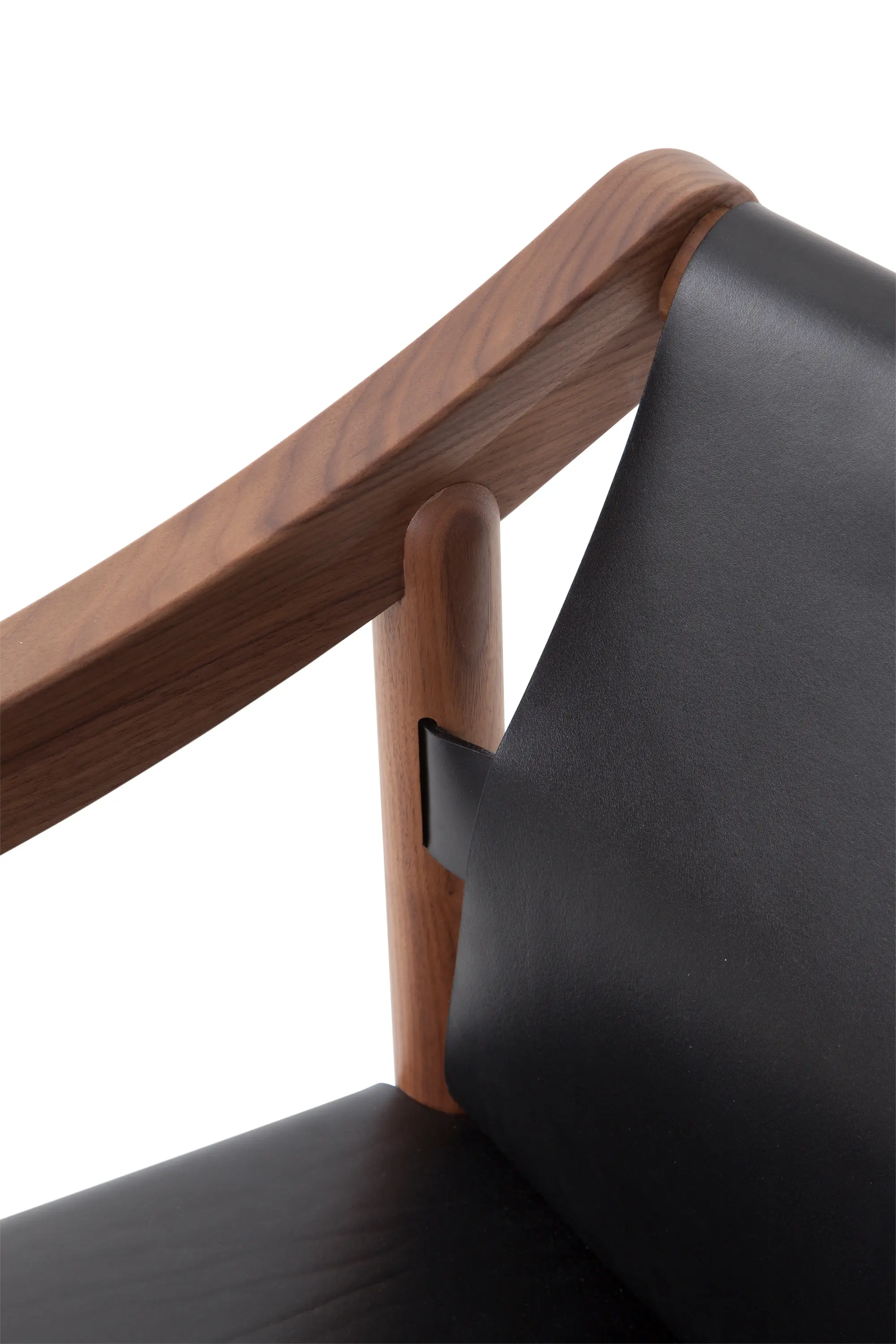
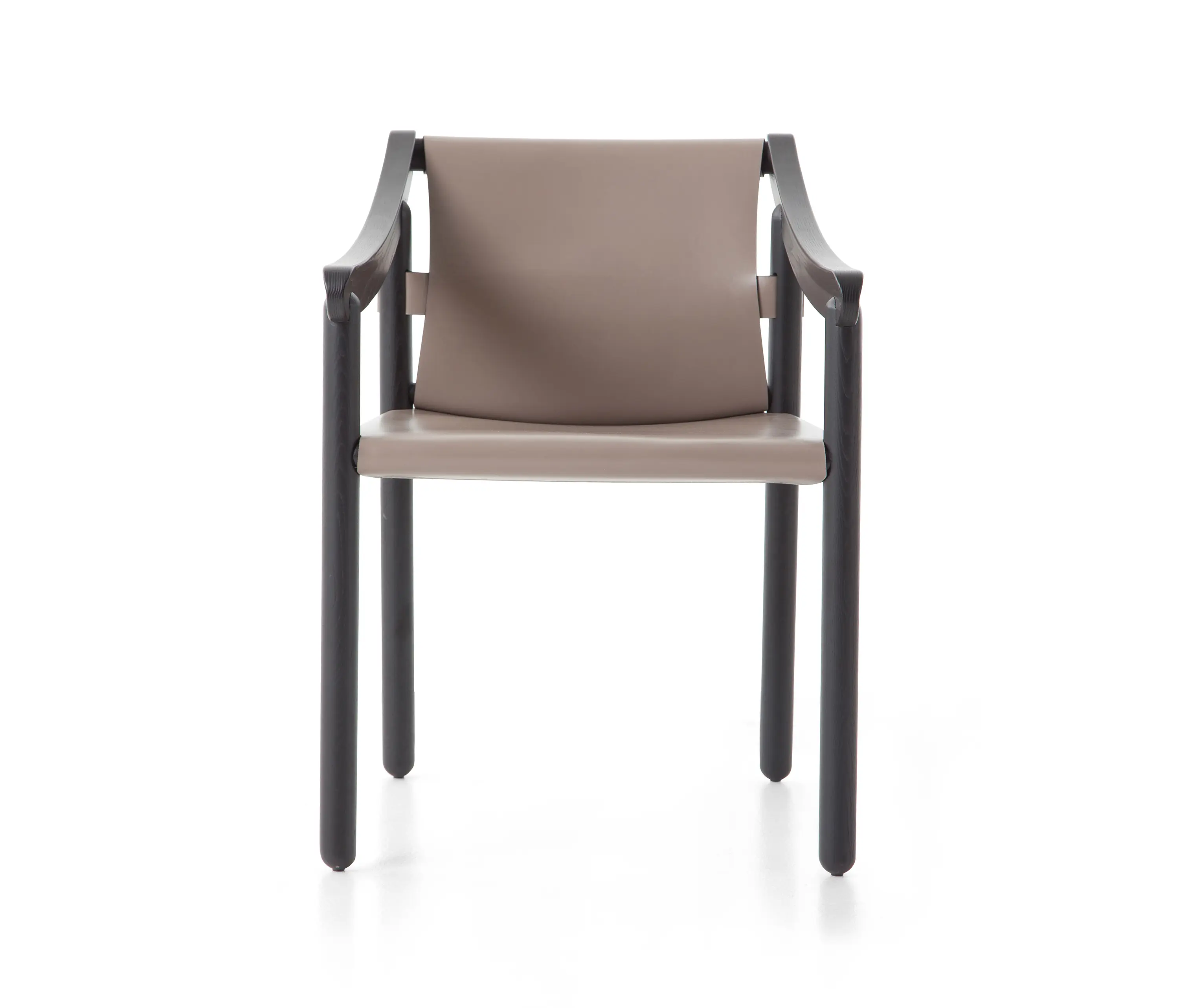
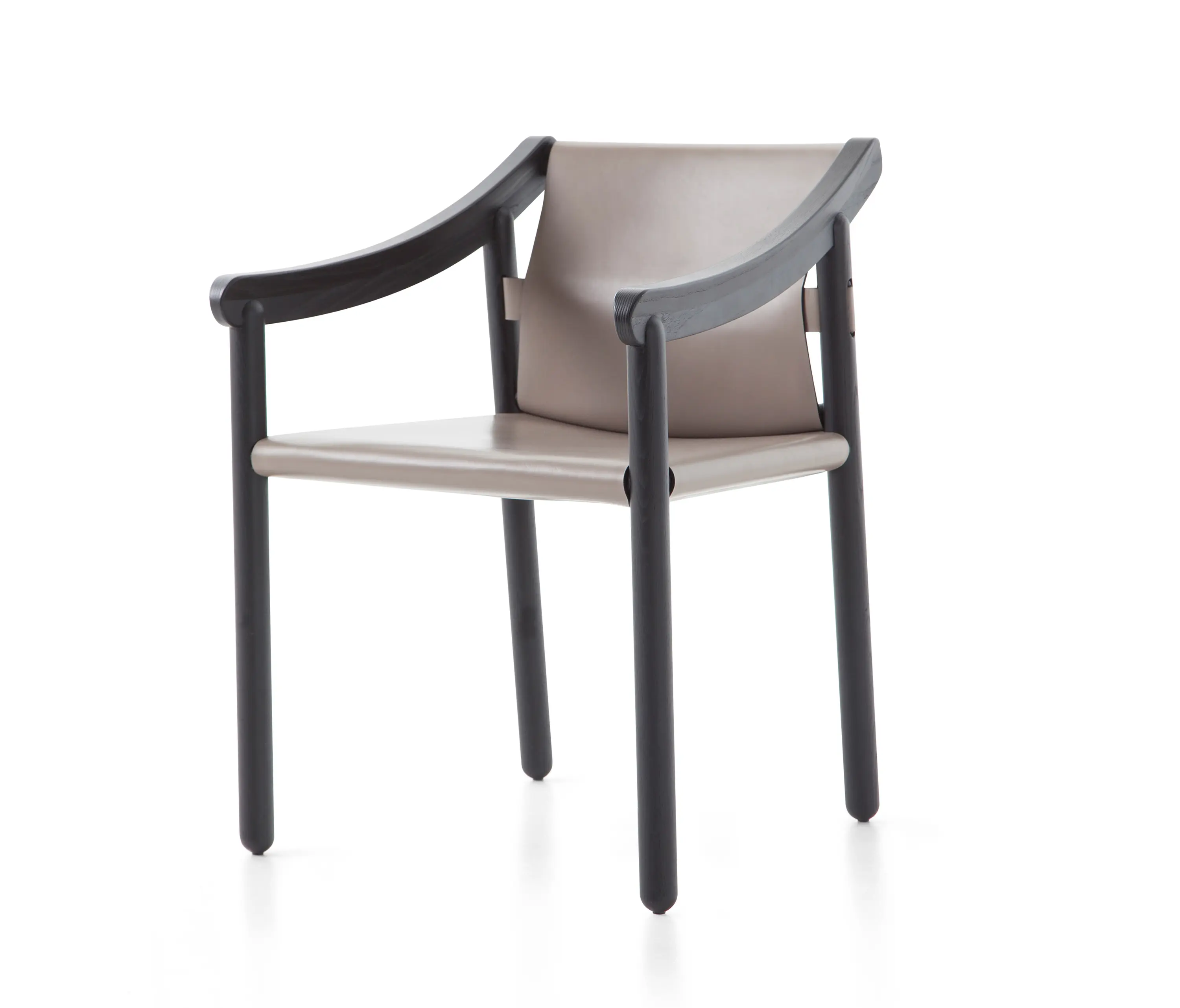
Produced by Cassina until 2000, this chair has now been relaunched, the finishes and details having been updated from the original archive model. The sophisticated elegance of the frame, which features cylindrical legs and curved arm-rests, has been rejuvenated thanks to Cassina’s extensive experience in handling leather, not to mention the company’s high quality carpentry skills. The complex nature of this piece is expressed in a design that looks simple but fully reflects the genius of the original concept, a veritable masterpiece of the crafts tradition. The frame, in finest quality wood, bespeaks the perfect combination of the artisanal tradition and premier CNC technology, while the overall design stands out for the self-supporting seat crafted from one single piece of saddle leather, curved and slotted into the frame. The decorative stitching has been removed, while the rear of the chair still features the leather belt that lends support to the back and enhances its comfort quotient.
Concept
Vico Magistretti’s 905 chair makes a comeback.
Sophisticated carpentry and saddle leather craftsmanship. A simple masterpiece 100% MedaMade. Cultural heritage for a modern chair.
The 905 chair, designed by Vico Magistretti in 1964, was in production by Cassina until 2000. Today the brand brings this historical piece back from its archives by updating its finishes and refining its workmanship, always with respect for the original project and in close collaboration with the Magistretti Foundation. A winning combination of wood and saddle leather. The 905 chair is characterised by cylindrical legs, arched armrests and the use of plush materials to enhance its
elegant demure. The piece unites Cassina’s consolidated experience in the workmanship of saddle leather and high quality carpentry and can therefore be considered by all effects MedaMade, the trademark deposited by the brand
to guarantee the utmost quality.
The 905’s complex workmanship results in a seemingly simple chair, confirming the geniality of Vico Magistretti’s original design.
Cassina’s has applied its expertise to relaunch this masterpiece with innovative production methods, underlining the chair’s structural features with aesthetic details. The frame, made from solid ash wood or Canaletto walnut in Cassina’s carpentry workshop, is representative of the brand’s ability to perfectly combine traditional craftsmanship with the sophisticated technology of numerical
control, 5 axes milling machines.
The self-supporting seat has been developed for this improved version in one piece of reinforced saddle leather rather than two coupled pieces sewn together: together with the backrest it gently curves around the chair’s frame with apparent simplicity thanks to Cassina’s trademark refined workmanship. While the first model’s decorative seat stitching has been removed to offer an even more essential design, the rear of the chair is still embellished with a leather belt to further support the backrest and increase comfort. Here, on the lower support, the Cassina logo has been branded directly onto the saddle leather in order to mark its
authenticity.
This product belongs to collection:
Base solid wood, Leather, Seat leather, Wood

Italy
Vico Magistretti was an Italian architect, as well as furniture and industrial designer. For many years he was a leading figure of Milan Rationalism, and developed timeless solutions for technical and formal problems. Vico Magistretti – a biography Ludovico Magistretti was born on 6 October 1920 in Milan. The son of an architect, he began his own architectural studies in 1939 at the Polytechnic University of Milan. In 1943, he left Italy during his military service, moving to Switzerland, where he attended architecture courses at the university in Lausanne. It was in Switzerland that Magistretti encountered the architects Ernesto Nathan Rogers, a key moment in his intellectual and professional formation. 1945 saw Magistretti move back to Milan, where he graduated from the polytechnic. He went on to work with the architect Paolo Chessa in his father Pier Giulio’s firm. Originally involved in city planning for Milan, Magistretti migrated in the 1950s over to the industrial design of furniture and lamps, working primarily for manufacturers Artemide, Cassina, Fritz Hansen and Kartell. One of his most celebrated pieces is the Carimate chair for Cassina, which, over the years, has become a bestseller. Magistretti’s work has been exhibited internationally in many of the most important museums, from Europe and the USA to Japan. Several pieces can be found in the permanent collection of the Museum of Modern Art in New York. Vico Magistretti’s various accolades include the Grand Prix and a Gold Medal from the Triennale di Milano, two Compasso d'Oro awards and a gold medal from the Chartered Society of Industrial Artists & Designers. Magistretti taught for 20 years at the Royal College of Art in London and was recognised as a Royal Designer. He also taught at Milan’s Domus Academy and was honorary member of the Royal Scottish Incorporation of Architects. Vico Magistretti’s design work Magistretti’s designs are considered by many to enjoy a cult status when it comes to Italian design. He was without doubt a leading figure in the golden era of Italian product design, combining innovative ideas with rational functionality. His work was always thoroughly utilitarian, using the latest technologies to create timeless classics. Carimate Chair In 1959, Vico Magistretti designed the Carimate Chair for the golf club in Carimate, Lombardy. It quickly became the most popular seating choice for restaurants throughout Italy. Produced by Cassina since 1962, the piece saw the beginning of a long collaboration with the Italian manufacturer. Eclisse Table Lamp Vico Magistretti designed the Eclisse Table Lamp in 1967 for the Italian manufacturer Artemide. The light source is housed at the centre of a small, sculpture-like form. The design was awarded a Compasso d'Oro in 1967 and can be found to this day in numerous museum collections worldwide. © by Architonic