


Contact details
Send a message
Call us
Distributors

Architonic ID: 20282103
Year of Launch: 1970
Italian industrial designer Joe Colombo pursued a career in painting and sculpture before he transitioned to design in the 1950s. In even the most functional homeware pieces, Colombo’s artistic background shines through in the sculptural silhouettes he creates.
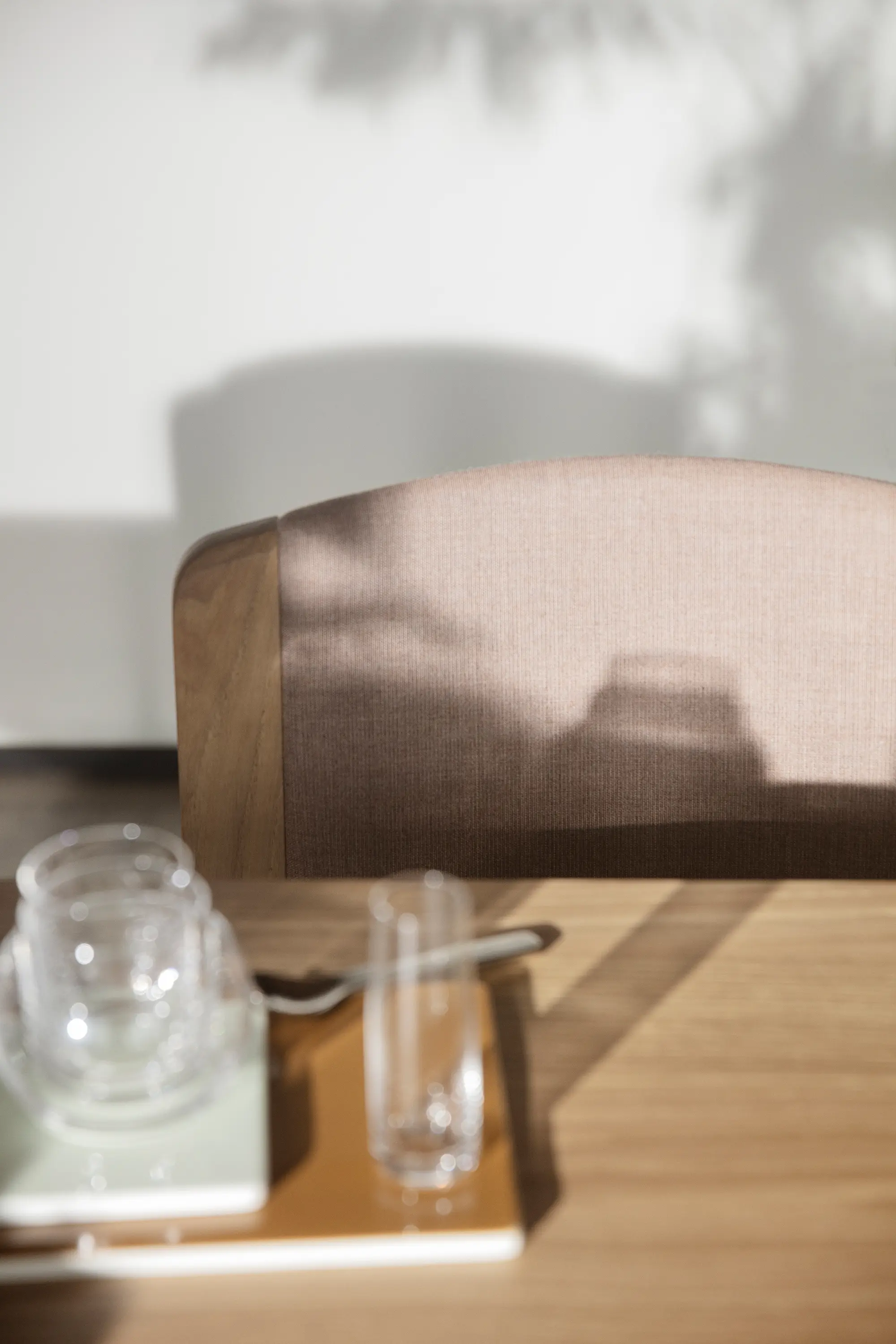
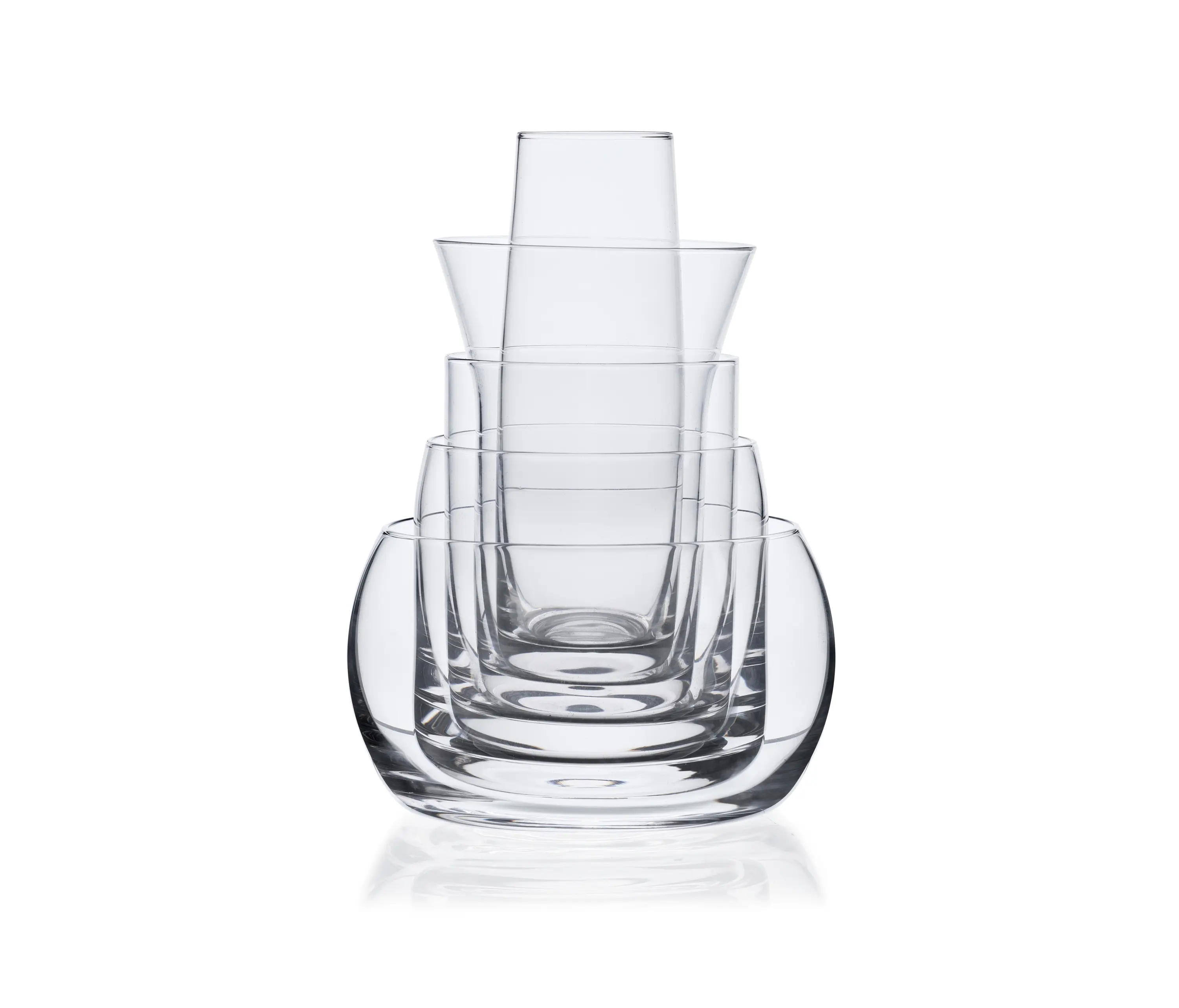
Such is the case with 5-in-1, a set of mouth-blown glasses that neatly intertwine. Featuring five pieces – originally intended as a cognac class, a white wine glass, a red wine glass, a grappa glass, and a water glass – each has a markedly different shape and purpose. Using that diversity to his advantage, Colombo’s ingenious design ensures that the glasses can be inserted into each other in order to form one transparent sculpture.
As well as its aesthetic appeal, the 5-in-1 is a highly practical design. Once stacked, the glasses reduce storage space, making it an ideal piece for smaller kitchens.
This product belongs to collection:

Italy
Joseph, or Joe, Colombo was an Italian designer, artist and architect who created many of the most iconic Italian designs, despite coming to the profession only late in his life. In a brief but successful career, Joe Colombo produced highly innovative objects, which made him into one of the most influential product designers in Italy at the time. Joe Colombo: a biography Joe Colombo was born 30 July 1930 in Milan. He studied painting at the Accademia di Brera art school in Milan until 1949, after which he began to study architecture at the Politecnico di Milano, which he graduated from in 1954. Having finished studying, Colombo joined the Nuclear painting movement, and exhibited his work together with its founders Enrico Baj and Sergio Dangelo in various cities in Europe including Milan, Turin, Venice and Brussels. In 1959 Joe Colombo took over his family’s business, a electrical factory, following his father’s death. It was here that he first experimented with new designs and production technologies. In 1962 he founded his own design studio in Milan, branching out from electrical items into furniture and other fields. In just a few years, many of his designs had become famous, and it was during the 1960s that he also established collaborations with manufacturers such as Alessi, Kartell, Zanotta, Stilnovo, Oluce and Rosenthal, with whom he would work for the rest of his life. Colombo’s Career as a Designer Together with his brother Gianni Colombo, Joe Colombo developed many new concepts in lighting, such as the prismatic Acrilica Lamp of 1962. In 1963, he designed his famous Elda armchair. One of Colombo's first designs for the manufacturer Cartel was Chair No. 4801, which he created from bent plywood in 1967. The flowing elements of the chair would go on to inform many of his later works in plastic, particularly the Chair Universal. From the 1960s onwards, Colombo created many more innovative designs for furniture, lighting, glass, door handles and even wrist watches. The Elda: the most famous of Joe Colombo’s chairs Joe Colombo’s Elda chair, named after his wife, was designed in 1963 and has continued to be produced in Italy ever since. The Elda Chair forms part of the permanent collection of the Museum of Modern Art in New York, the world’s most important design museum. The chair’s sinuous curves and fibreglass shell were both highly innovative when it was designed, and both became hallmarks of Colombo’s later work. Joe Colombo’s Spider Lamp Joe Colombo's most famous lamp is the Spider floor and table lamp, designed in 1965 for Italian brand Oluce. Colombo won Italy’s most prestigious industrial design prize, the Compasso d'Oro, with the Spider Lamp. In 1972, it formed part of the groundbreaking exhibition "Italy - The New Domestic Landscape" at the MoMA in New York, and has since become a design classic of the period. © by Architonic