Teilen
1/122

Regalsystem 606: Grundstruktur
Teilen
- Startseite/Regale/
Regalsystem 606: Grundstruktur
Über dieses Produkt
Architonic ID: 20115516
SKU: 606
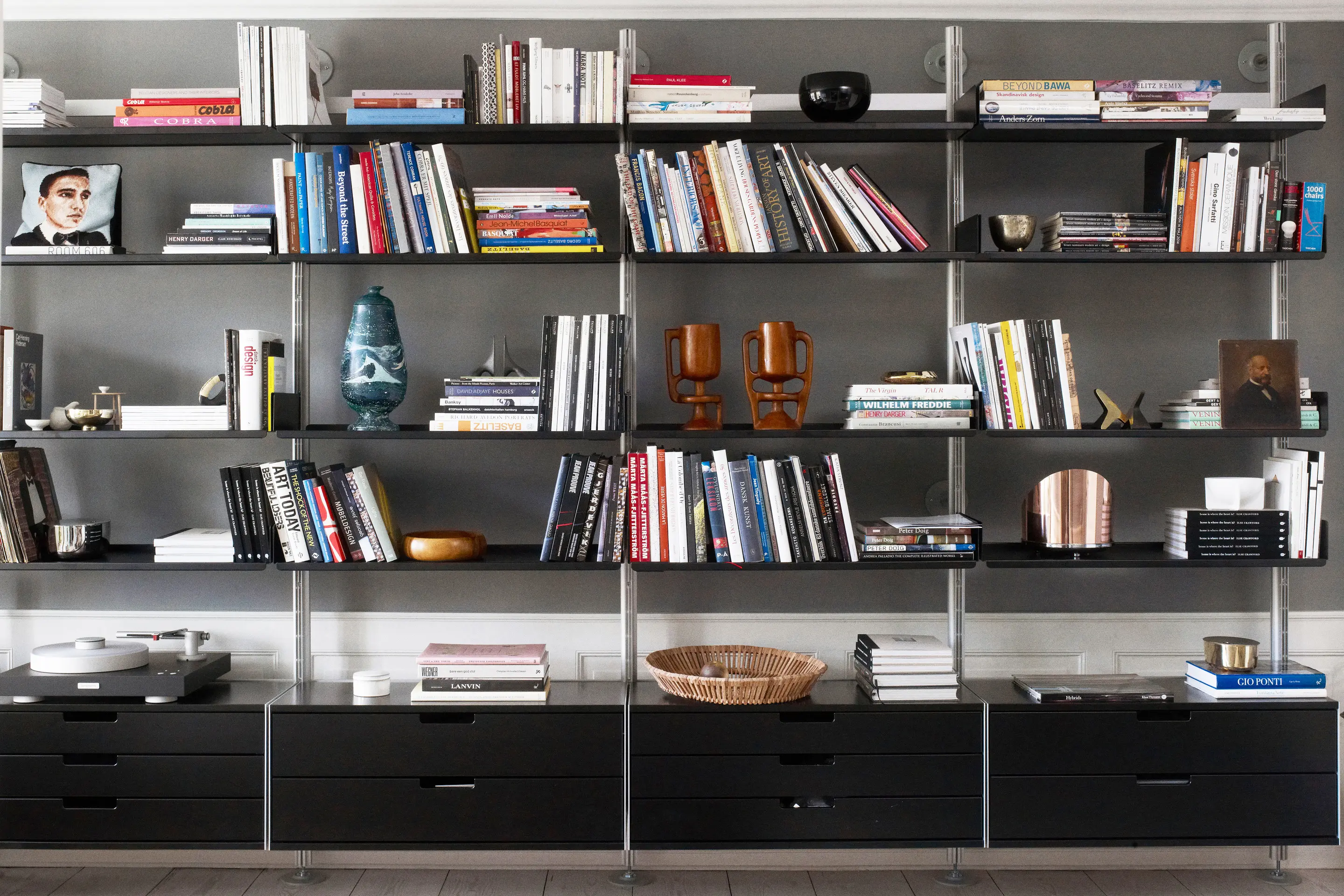
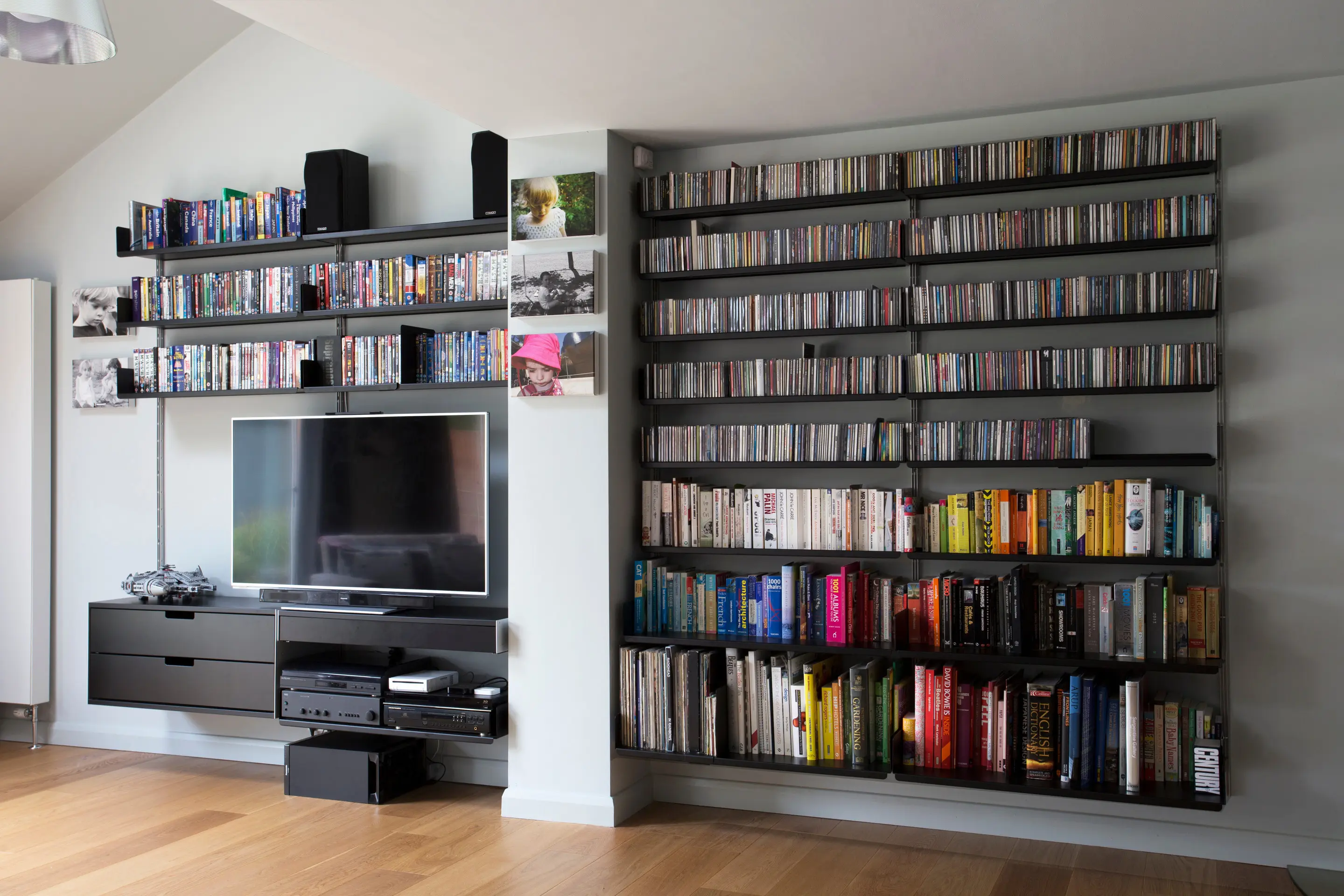
Die Basis des Regalsystems bilden E-Profile aus Aluminium und Trägerstifte.
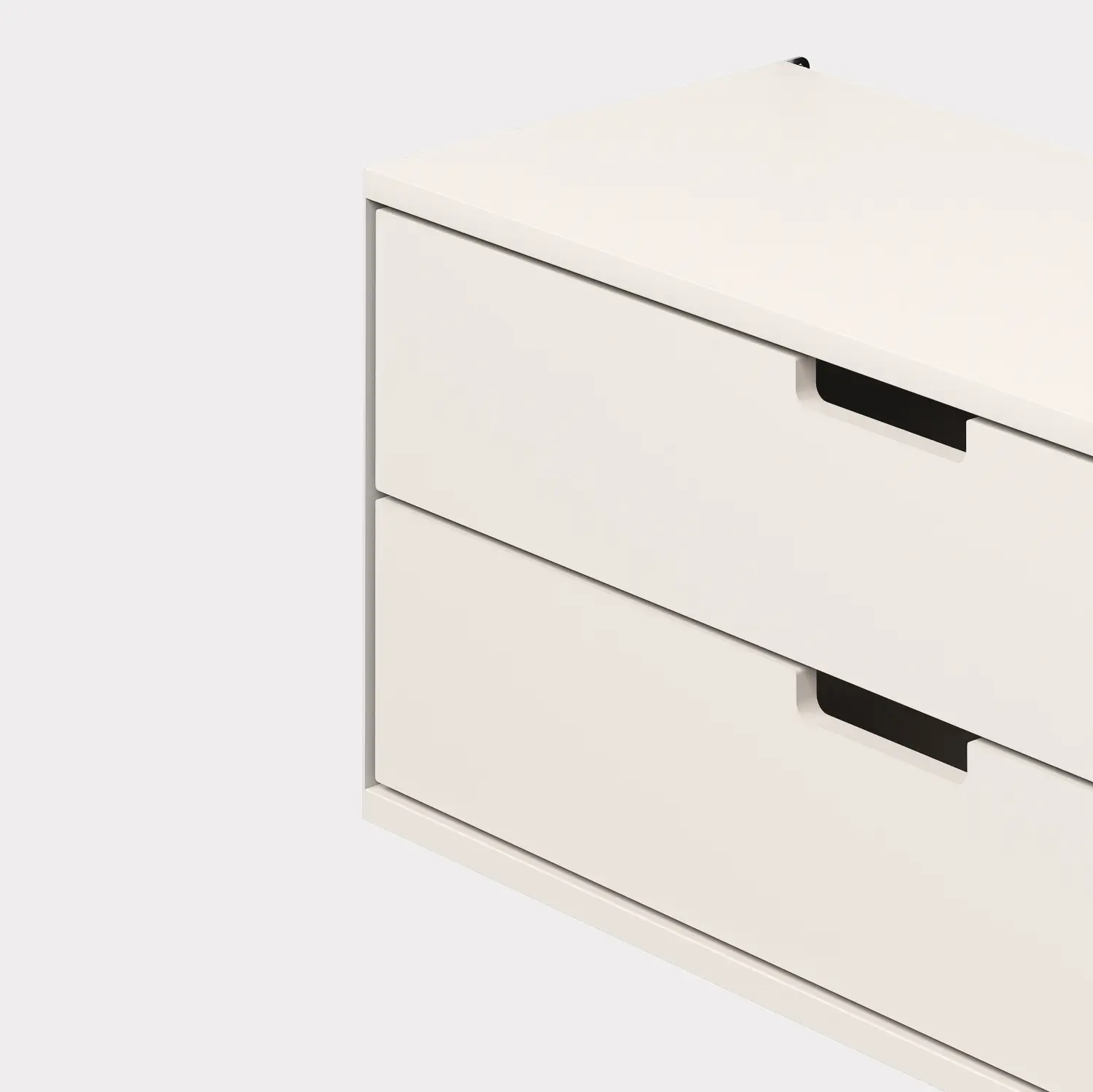
Tablare, Kästen und Tische werden mit Hilfe der gekerbten Stifte einfach an gewünschter Position in die E-Profile eingehängt – ganz ohne Werkzeug. Sie können zwischen zwei Rasterbreiten wählen – schmal (66,7 cm) und breit (91,2 cm) –, die sich in Kombination an fast jeden Raum optimal anpassen. Unsere E-Profile aus eloxiertem Aluminium sind in verschiedenen Standardgrößen erhältlich: 57cm; 114cm; 171cm; 200cm; 228cm. Das Regalstystem ist in sechs verschiedenen Farben erhältlich: Grauweiß, Buche und Grauweiß, Schwarz, Buche und Schwarz, Silber, Buche und Silber
Konzept
1960 von Dieter Rams entworfen und seitdem von Vitsœ hergestellt. Das Regalsystem 606 ist ein zeitloser Klassiker. Es lässt sich leicht beim Umzug mitnehmen und passt sich dank beständiger Erweiterungen und Verbesserungen wechselnden Anforderungen an. Sie können ein einzelnes Regal oder eine ganze Bibliothek erwerben.
Dieses Produkt gehört zur Kollektion:

Produktdetails
Material
Aluminium, Metall, Struktur Metall
Design-Dateien
4
Designer

Dieter Rams
Germany
Biography One of Germany’s and the design world’s best-known industrial designers, Dieter Rams, was born May 20, 1932 in Wiesbaden, Germany. Influenced by his grandfather, a carpenter, Rams knew he wanted to design and create from an early age. In 1947 he enrolled in architecture at the Werkkunstschule Wiesbaden, leaving after a year to study carpentry and returning in 1951 to graduate with honours. Rams joined Braun in 1955, starting as an architect and interior designer at the age of 23, before moving into design in 1956. By 1961 Rams was the head of Braun’s product design and development division at Braun, becoming the design and production manager seven years later. In 1988 Dieter Rams joined Braun’s board of directors as a chief representative and in 1995 was promoted from director of product design to Braun’s executive director of corporate identity affairs, a position which he held until his retirement in 1997 at the age of 65. Rams was also a member of the BraunPrize jury from 1974 to 1995. Still in place today, the BraunPrize is an international design competition that is open to students or graduates of industrial design courses. Together with Hans Gugelot, Dieter Rams designed the Phonosuper SK4, nicknamed “Snow White’s Coffin”, the forerunner of the modern hi-fi system. A combination radio and record player, the SK4 was hugely influential, and Rams went on to design the first component audio system (Studio 2), the first portable world-band radio (T 1000) and the first transistor radio that could be fitted into a car (TP1). The designs were initially considered avant-garde and the Braun brothers encouraged Rams to design modern furniture for companies such as Vitsoe to take this new design trend to the heart of people’s homes. Dieter Rams is known worldwide as one of the most significant representatives of function-oriented design. His design work throughout the second half of the 20th century has been recognized with a multitude of honours including the title of Royal Designer for Industry by London’s Royal Society of Arts. He was also awarded the SIAD medal by the Society of Industrial Artists and Designers in London in 1978 and the World Design Medal by the Industrial Designer Society of America in 1996. In 1990 he was the first winner of the Industrie Forum Design, Hannover for his special contributions to design. As recognition of his commitment to the design philosophy which he helped to establish, in 2002 he was awarded the Order of Merit of the Federal Republic of Germany. Many of the Braun designs developed under his guidance have become part of permanent collections of several prestigious international museums, including the Museum of Modern Art in New York, the Centre Pompidou in Paris, the Werkbund Archiv in Berlin, the Victoria & Albert Museum in London and the Stedelijik in Amsterdam. Dieter Rams’ work has a quality which distinguishes it from the vast majority of industrial design of the mid 20th century. His products are designed to be timeless and beyond fashion. Even people who have never heard of Dieter Rams will probably have owned a few of his products in their lifetimes and his designs are still influential today.