Teilen


1/3


Bauhaus Deckenleuchte | HMB 27 / ... Ni
Verfügbare Varianten:

- Startseite/Pendelleuchten/
Bauhaus Deckenleuchte | HMB 27 / ... Ni
Über dieses Produkt
Architonic ID: 1055837
SKU: HMB 27 / ... Ni
Einführungsjahr: 1926
1927 wurde diese Leuchte von Marianne Brandt entworfen und war bereits damals so beliebt, dass sie in Serie produziert wurde. Die Pendelleuchte im klassischen, unaufdringlichen Bauhaus-Stil bieten wir Ihnen in vier Größen an. Als Variante gibt es auch ein Modell mit einer Halterung und Kette aus poliertem und zaponiertem Messing.
Eine Variation der Leuchte DMB 26 ist dieses Modell mit drei Ketten anstelle der Metallstäbe.
Deckenleuchte aus vernickeltem Metall oder Messing poliert und zaponiert, Glas opal überfangen.
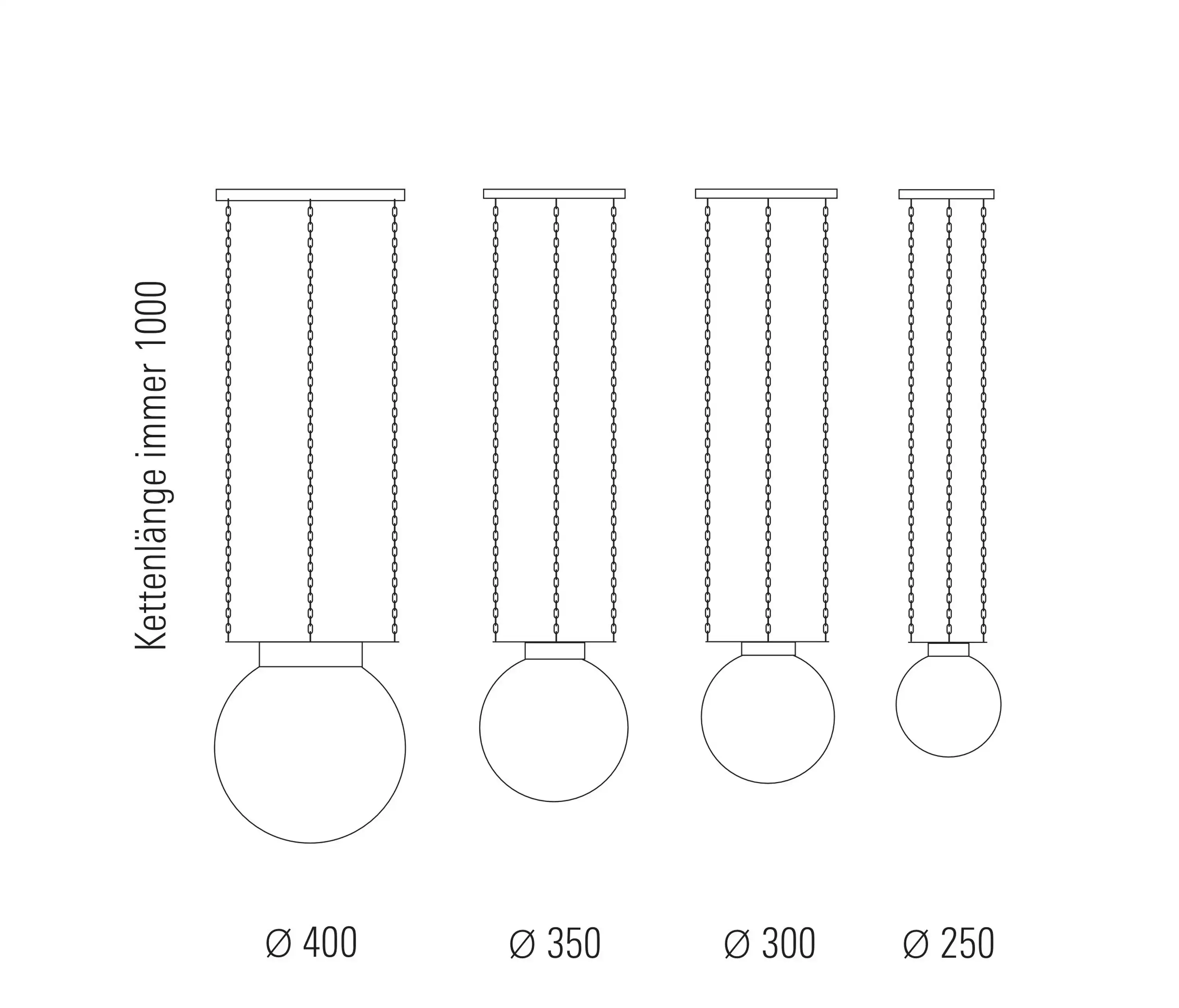
Lieferbar in folgenden Kugeldurchmessern: 250 oder 300 oder 350 oder 400 mm.
Nettogewicht: 2,7 kg (Ø 250mm), 4,1 kg (Ø 300mm), 4,4 kg (Ø 350mm), 7,0 kg (Ø 400mm)
Jede Leuchte ist fortlaufend nummeriert und trägt das Signet TECNOLUMEN/BAUHAUS.
Empfohlenes Leuchtmittel: LED Lampe 8 W, matt
Lampenfassung: E 27
Nettogewicht: 2,7 kg
Pendellänge (Rohr, Strange, Kette, Kabel) in Meter: 1m
Dimmbar
Kein Leuchtmittel enthalten
Dieses Produkt gehört zur Kollektion:

Produktdetails

Varianten
1
Zu den Produktseiten dieser Varianten gelangen Sie – einfach anklicken!

Design-Dateien
1
Vertriebspartner
Designer

Marianne Brandt
Germany
Marianne Brandt (née Liebe) (1893–1983) was a pioneering German designer and one of the most influential figures of the Bauhaus movement. Trained initially as a painter, she joined the Bauhaus in Weimar in 1924 and soon became a leading student in the metal workshop, an area dominated by men at the time. Under the mentorship of László Moholy-Nagy, Brandt's innovative designs in metalwork — particularly her teapots, lamps, and ashtrays — came to embody the functional and minimalist aesthetics of the Bauhaus. Her iconic teapot design, created in 1924, is celebrated for its geometric purity and remains a landmark of 20th-century industrial design. Brandt later became the head of the Bauhaus metal workshop, making her one of the first women to lead a workshop at the school. Beyond her Bauhaus contributions, Brandt worked as a designer for the metalware company Ruppelwerk and later engaged in teaching and visual arts. Her legacy lies in her commitment to combining functionality with elegant simplicity, which helped shape modern industrial design and challenged gender norms within the field.


