Teilen


1/22
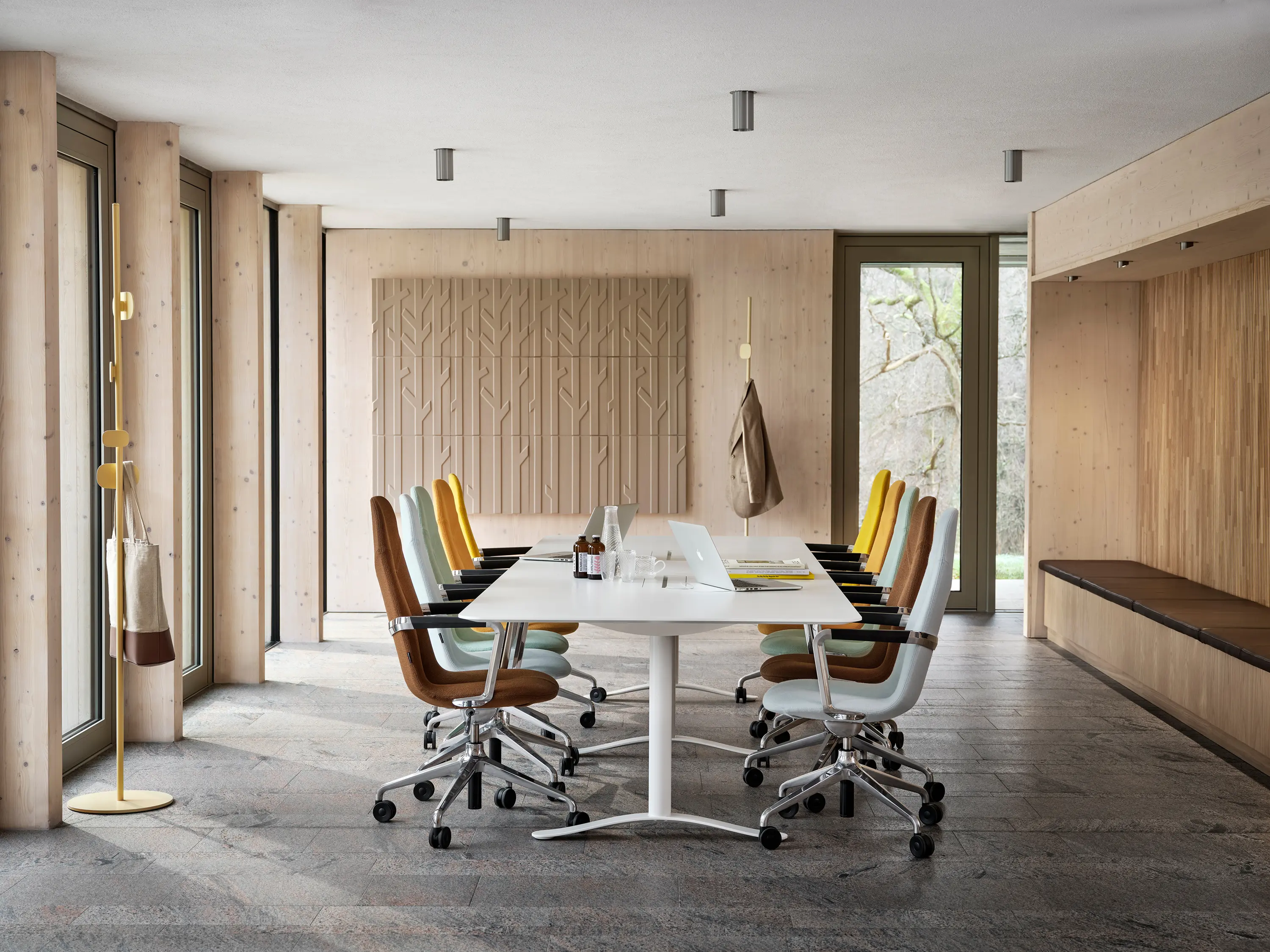


Primo HB-1771
- Startseite/Couchtische/
Primo HB-1771
Über dieses Produkt
Architonic ID: 20161699
Einführungsjahr: 2019
„Mit dem Primo-Tisch habe ich die Primo-Serie weiterentwickelt. Die Flächen nehmen die Fasen des Untergestelles in verschiedenen Richtungen wieder auf und gehen dann in einen runden Pfeilerfuß über. Ein gediegener Säulentisch mit Untergestell aus Aluguss, das wegen seines Abstandes zum Boden Eleganz vermittelt. Primo ist ein prima Tisch für alle möglichen Stühle und Aufstellorte.“ /Stefan Borselius
Tisch mit Platte aus weißem Laminat (gem. RAL9016), weiß pigmentiertem Eschenfurnier, Eichenfurnier oder mit schwarzem Desktop (4023). Untergestell in weiß (RAL 9016) oder schwarz lackiertem (RAL 9005) Metall oder Chrom/poliertem Aluminium.
Größe 70x70 cm, Höhe 110 cm.
Gewicht 16 kg
LB-1641 70x70 cm H 45 cm
LB-1671 70x70 cm H 60 cm
HB-1541 70x70 cm H 73 cm
HB-1741 70x70 cm H 90 cm
HB-1771 70x70 cm H 110 cm
LB-1646 Ø70 cm H 45 cm
LB-1676 Ø70 cm H 60 cm
HB-1546 Ø70 cm H 73 cm
HB-1746 Ø70 cm H 90 cm
HB-1976 Ø70 cm H 110 cm
LB-1647 Ø90 cm H 45 cm
LB-1677 Ø90 cm H 60 cm
HB-1547 Ø90 cm H 73 cm
HB-1747 Ø90 cm H 90 cm
HB-1977 Ø90 cm H 110 cm
Konzept
"Ich wollte einen ebenso bequemen wie ästhetisch ansprechenden Stuhl kreieren. Deutliche Nähte und Winkel treffen auf runde Formen. Dabei ist die Rückseite ebenso wichtig wie die Vorderseite.“
„Ich wollte einen gediegenen aber preiswerten Konferenzstuhl schaffen. Eine bequeme Sitzschale in verschiedenen Höhen, wo der Körper sich an die runden Formen des Stuhls schmiegt. Im Kontrast dazu stehen die markanten Nähte, Linien und Winkel der Außenseite.“
Stuhl. Lehnstuhl.
Drehgestell aus poliertem, recycelten Aluminium auf Rollen.
Dieses Modell ist auch mit hoher Rückenlehne und höhenverstellbar mit Schaukelfunktion erhältlich.
Dieses Produkt gehört zur Kollektion:

Produktdetails
Material
Untergestell Metall, Verbundwerkstoff, Metall, Tischplatte beschichtet / laminiert
Design-Dateien
5
Vertriebspartner
Designer

Stefan Borselius
Sweden
born 1974 in Malmö. Educated at the Konstfack University College of Arts, Crafts and Design. He attended Carl Malmstens school and Steneby school, and studied furniture carpentry and design. Stefan Borselius is an ingenious designer with a head bursting with ideas. He can be quiet and thoughtful, but when he speaks out he’s quite the verbal gymnast, an art he balances with being an equally inventive and an aesthetically pleasing designer. Stefan’s choice of career was inspired by his grandfather and great grandfather who were both skilled furniture carpenters. Stefan prefers to call himself a carpenter, and he believes that hands, thoughts and precision are all important tools of his occupation. Right from the function and material of an object through to the final product, Stefan wants to create furniture for our time and our way of living, our here and our now. When he works with a product, Stefan Borselius leaves nothing to chance, but goes methodically and whole- heartedly through every single detail, every function and every characteristic which a material or a technique can offer. He pushes the boundaries of what is possible to produce, and would rather give up and pursue another route than not produce anything at all. He leaves no stone unturned in his quest for a solution. As a result, his products have a strong sense of identity which already answer unasked questions in their strong expressionism.


