


Kontaktdaten
Nachricht senden
Ruf uns an
Vertriebspartner
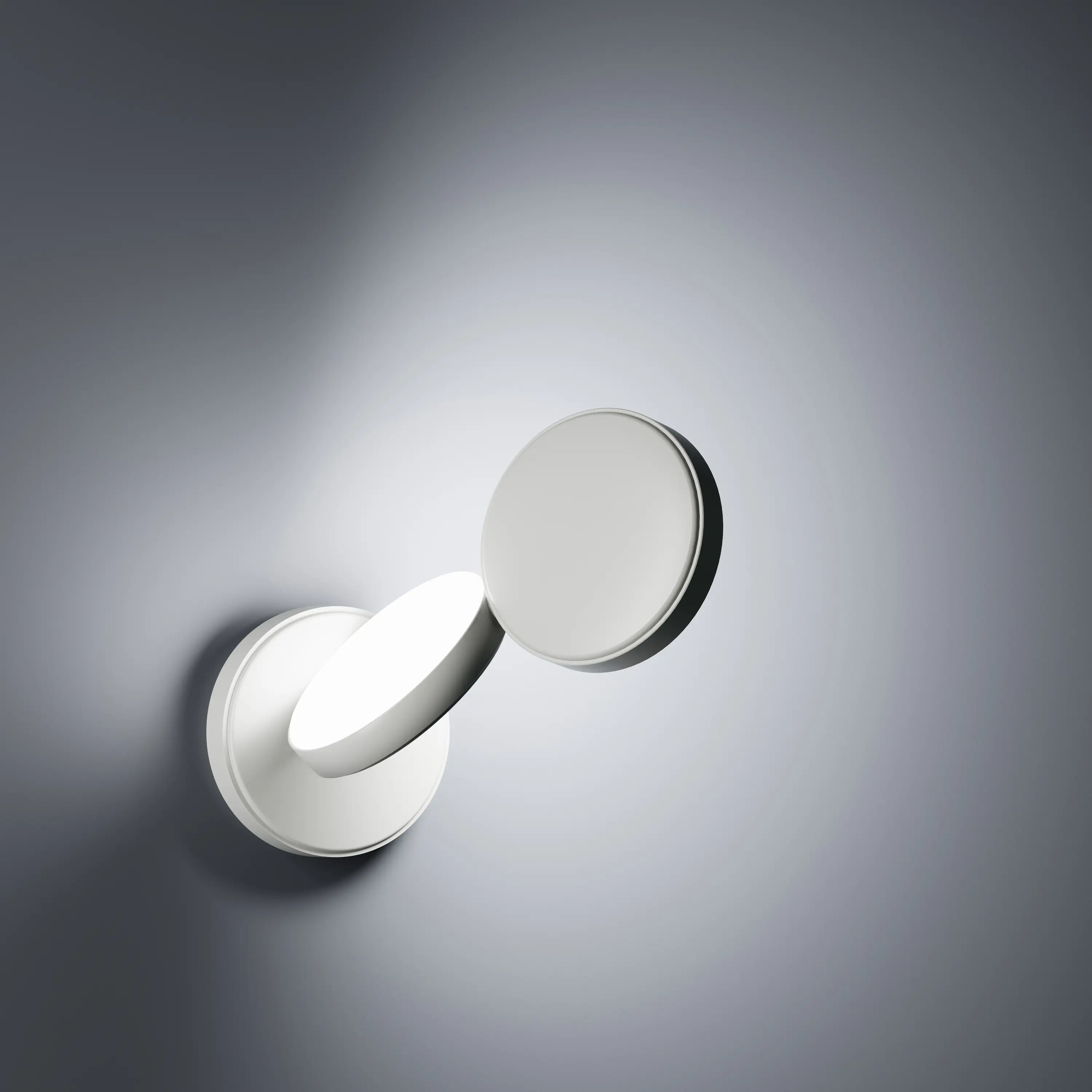
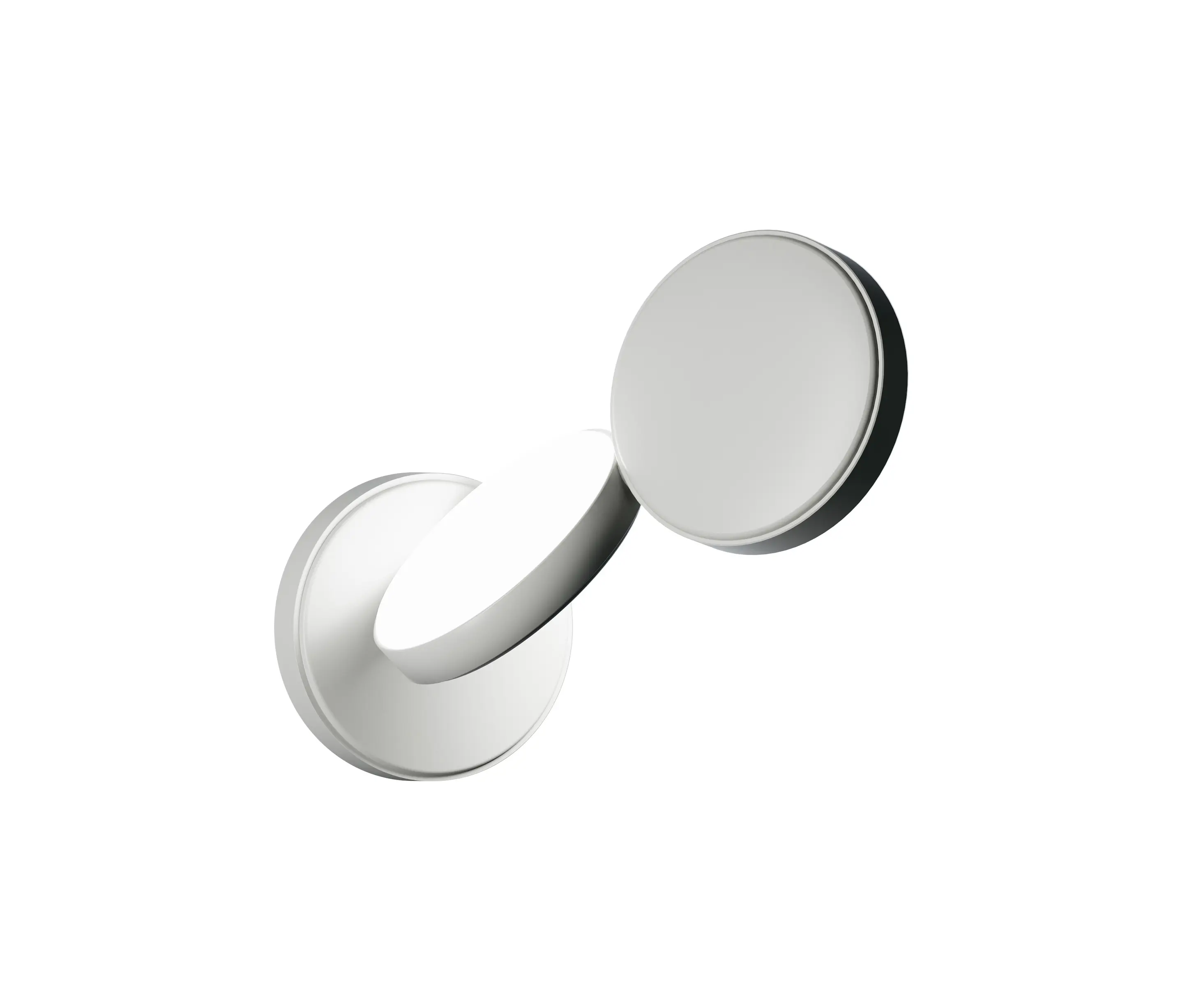


Optunia Wandleuchte
Architonic ID: 1488944
Einführungsjahr: 2017
Familie mit Wand-. Boden-, Hägen-, Tisch und Stehleuchte. Körper aus weiß oder onyxfarben beschichtetem oder schwarz, glänzend verchromtem, druckgegossenem Aluminium. Formglas, rückseitig beschichtet und satiniert. Basis aus beschichtetem Metall. In der Wand-/Deckenleuchte ist das Netzgerät in der Basis integriert, in der Pendelleuchte ist es im Deckenbaldachin, in der Tisch-, Steh- und Bodenleuchte im Netzstecker, mit Dimmer am Kabel.
Ø 13 – 22,3x26,2 cm
2x11W ( 3000K, CRI>80, Lumen 1384+1384 )- dimmbar
Konzept
Optunia ist eine Leuchtenfamilie, in den Ausführungen Tischleuchte (mit und ohne Ständer), Bodenleuchte, Wandleuchte und Pendelleuchte. Ihre Funktionalität besteht in der Möglichkeit, die beiden Scheiben, aus denen sich der Kopf zusammensetzt, um 360 Grad zu drehen und so eine außerordentliche Zahl an Lichtkombinationen zu schaffen. Die untere Scheibe dreht sich um eine Achse und gleichzeitig dreht sich die obere Scheibe um eine senkrecht zur ersten verlaufenden Achse. Diese doppelte Bewegung ermöglicht es Optunia, sowohl die Merkmale einer Leuchte mit direkter Lichtemission als auch die mit indirektem Licht zu vereinen und so die Wand oder die Decke flexibel für die Lichtstreuung zu nutzen. Zu ihrer Funktionalität gesellt sich ein Design, das an eine in der Natur anzutreffende Form erinnert. Die beiden Scheiben ähneln in ihrer anordnung den Blättern des Feigenkaktus, der sich auch im Namen der Leuchte widerspiegelt. Eine außerordentlich funktionale Leuchtenfamilie, deren Form von ihren Farbvarianten noch hervorgehoben wird: ein dezentes, grafisches Mattweiß, ein dunkles spiegelndes Chrom, das an die Kostbarkeit des Metalls erinnert, und ein dunkler Ton, der an Onyx erinnert, einen Quarz, dessen Farbe von Dunkelbraun ins Schwarze geht.
Dieses Produkt gehört zur Kollektion:
Aluminium, Metall

Sweden
Claesson Koivisto Rune is a Swedish architectural partnership, founded in Stockholm, in 1995, by Mårten Claesson, Eero Koivisto and Ola Rune. Begun as an architectural firm, it is now an internationally acclaimed, multi-disciplinary office with an equal emphasis on both architecture and design. As the first Swedish office to have exhibited in the international section at the Venice Architecture Biennale, in 2004, they are also responsible for a wide range of award-winning projects such as K5 Tokyo, Grand Hotel Terminus, Villa Terminus, Zander K and Bergen Børs hotels in Bergen, Norway, Inde/Jacobs gallery building in Marfa, Texas, Sfera Building culture house in Kyoto, the Tind Prefab house collection for Fiskarhedenvillan, Widlund House private villa on Öland, Örsta Gallery building in Kumla, Nobis Hotel and Hotel Skeppsholmen in Stockholm. They design for such international companies as Arflex, Artifort, Asplund, Boffi, Capdell, Cappellini, David design, Dux, Fontana Arte, Kasthall, Living Divani, Modus, Muuto, Nikari, Offecct, Paola Lenti, Smaller Objects, Studio TK, Tacchini, Wästberg, among others. Claesson Koivisto Rune has received an array of international awards and recognitions, amongst them ten American Good Design Awards 2009 - 18, the Designpreis Deutschland (Gold and Silver) 2011 by the Federal Republic of Germany, Designer of the Year 2011 and Furniture of the Year 2012 by Elle Deco Sweden, both Designer of the Year and Best Seating 2014 by Elle Decor Italia, and the Red Dot Design Award – Best of the Best 2014, making them the first office to hold the prestigious Red Dot in five different product categories, architecture included. In 2015, they also received the prestigious Bruno Mathsson award, the highest honour in furniture design in Sweden and the Scandinavian region. Quotes on Claesson Koivisto Rune “When they unveiled the plans for us we were simply bowled over by the amazing design.” Vilis Inde, Art gallerist and author, Marfa, Texas, USA (From the book ”Claesson Koivisto Rune in Marfa The inde/jacobs gallery”, 2015, ISBN 978-91-877733-02-4) “In my time working as an observer to the design industry, it is rare to see a trio of men working so consistently well together.” Max Fraser, Design author and commentator, London, UK (From the book ”Claesson Koivisto Rune On Yellow”, 2011, ISBN 9789197655743) ”Claesson Koivisto Rune is a prime example of the power of contemporary design. Architecture and design are not only one profession, but they also lose the scale difference that allowed them to be kept separate.” Paola Antonelli, Curator of Architecture and Design, Museum of Modern Art (MoMA), New York, USA (From the book “Claesson Koivisto Rune Architecture/Design”, Birkhäuser 2007, ISBN: 978-3-7643-7948-3) ”The architecture and furniture designs by Claesson Koivisto Rune are the most evident example of the way inventiveness, humour and the reversals of stock forms can produce new panoramas for our minds, and these panoramas can be expressed with an instinctive simplicity, not with a reductive and faint-hearted minimalism.” Italo Lupi, Editor and Art Director of Abitare magazine, Italy (From the book ”Nine Houses Claesson Koivisto Rune”, 2003, ISBN 4-9901483-0-4 C0052)