


Teilen
1/6


- Startseite/Sofas/
Bras
Über dieses Produkt
Architonic ID: 20119228
Einführungsjahr: 2014
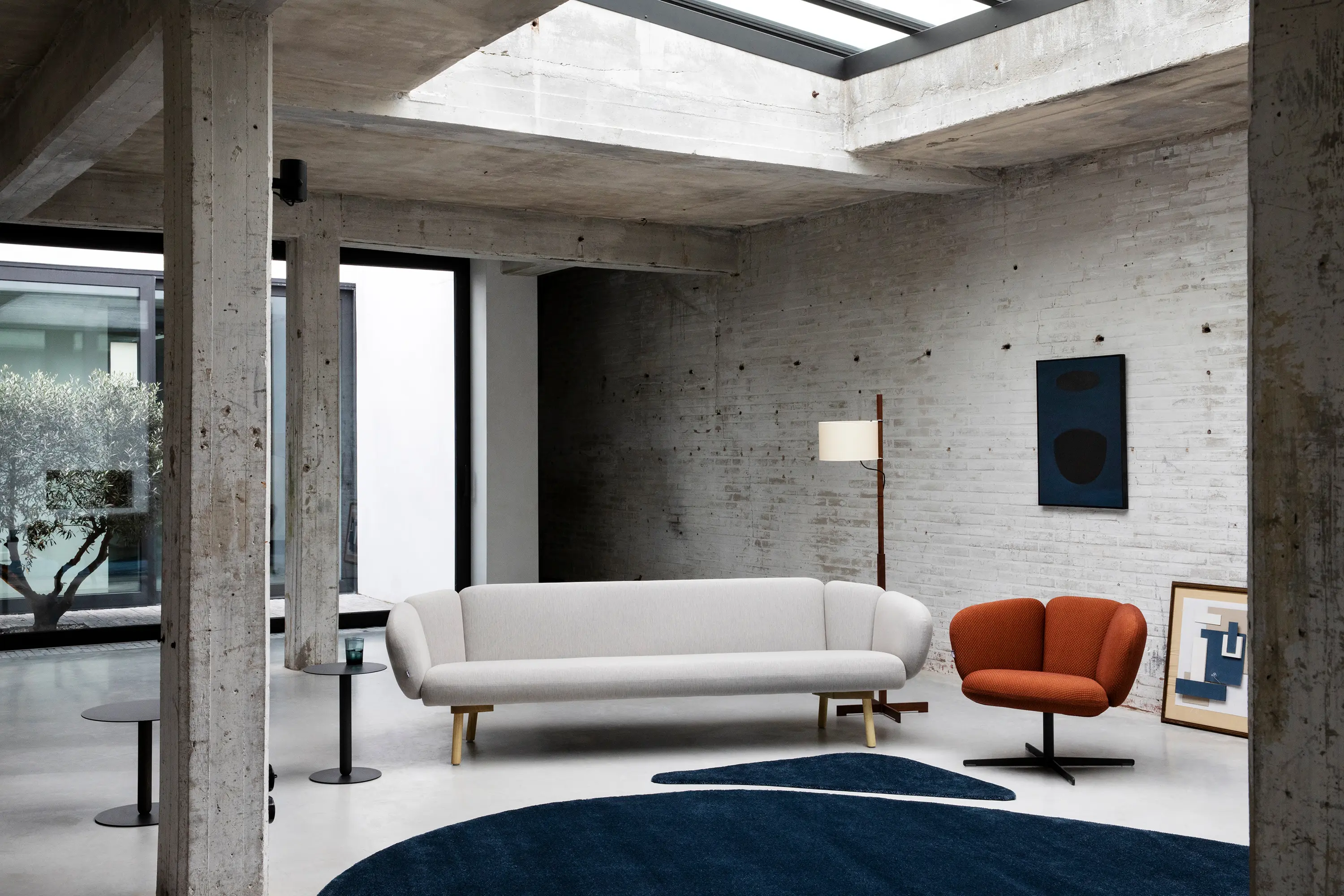
Das Bras lädt Sie ein und bietet Ihnen Halt. Ob Sie sich zurücklehnen oder gemütlich hinsetzen wollen, Sie erleben den entspannenden Komfort, den Ihnen dieses reizvolle, geradlinige Sofa bietet.
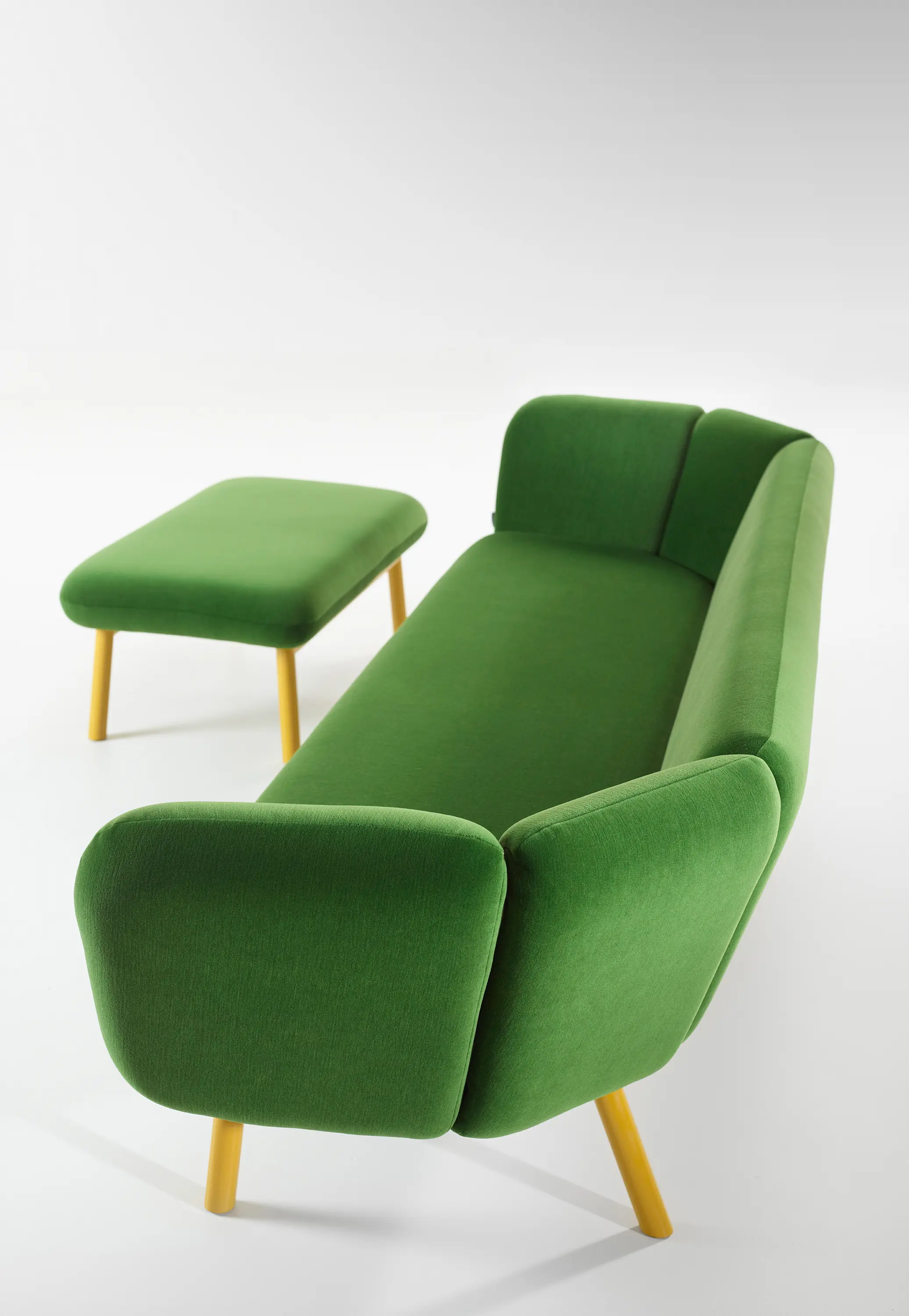
Besonders prägend beim Bras sind die außergewöhnlichen Armlehnen, durch die die Arme in ihrer natürlichen Haltung ganz entspannt auf der Lehne ruhen; das war für Khodi Feiz die Inspiration für das Design. Schließlich bildet der Arm keinen rechten Winkel, sondern neigt sich eher in Facetten, genauso wie die Armlehne beim Bras.
Sitzfläche sowie Rücken- und Armlehnen werden einzeln gepolstert und erst im Anschluss miteinander verbunden, damit die straffen Rundungen des Sofas zusätzlich akzentuiert werden und das Modell seinen scheinbar schwerelosen und einzigartigen Charakter erhält.
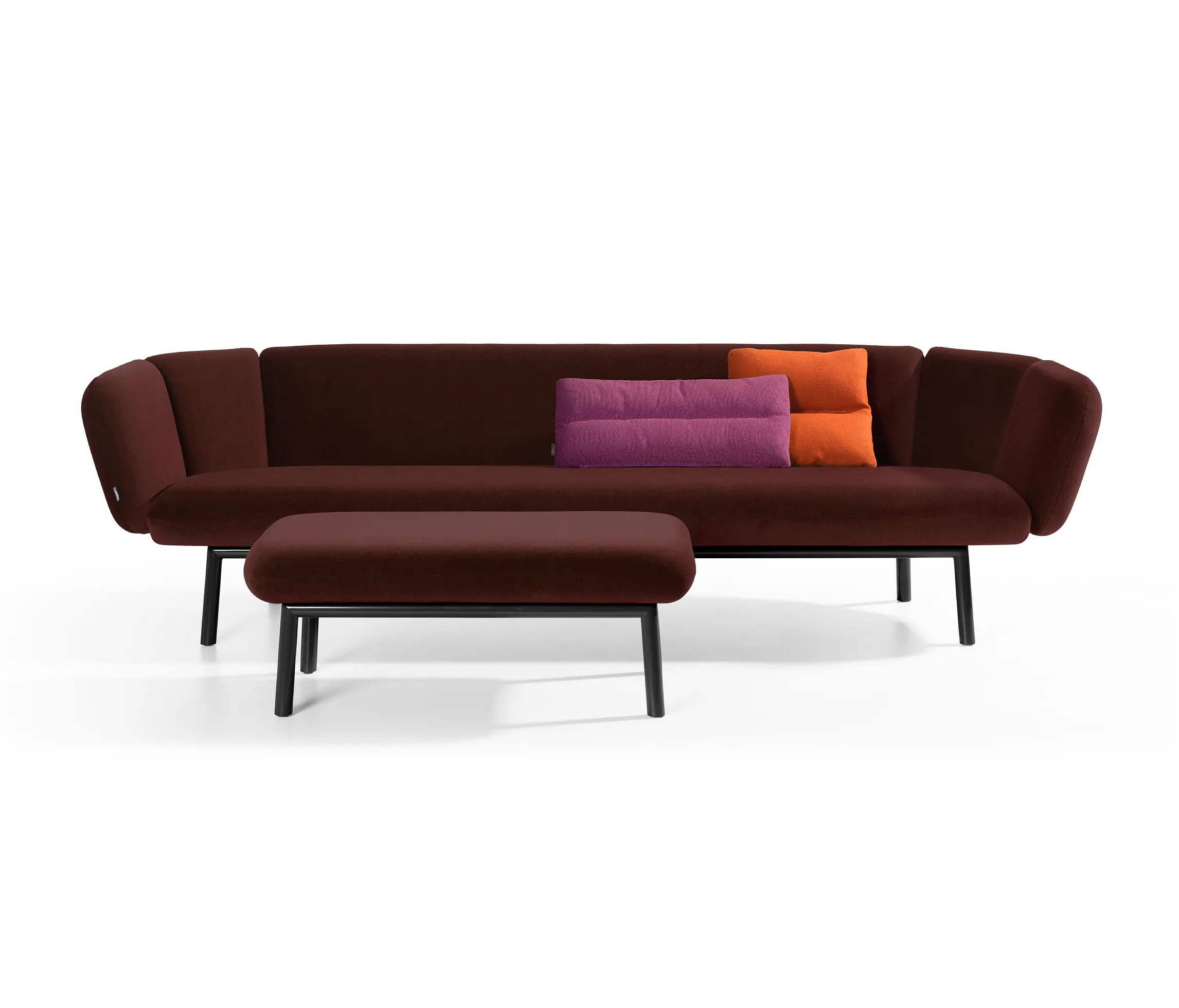
Durch die besondere Konstruktion ist das Rückenteil etwas gefedert, sodass es die Bewegung beim Hinsetzen dämpft. Die Sitzfläche ist mit einem geflochtenen Element ausgeführt, über dem eine dicke, weiche Schicht des dennoch kräftigen Schaumstoffs angebracht wird. Die beiden dazugehörigen Kissen verleihen dem Sofa eine spielerische Note. Und die Fußbank bietet auch ausgestreckten Beinen Platz, wenn sie nicht als Beistelltisch benutzt wird. Das Untergestell ist pulverbeschichtet.
Bras ist als 2-, 2,5- und 3-Sitzer und der Hocker sowie die dazu passenden Kissen sind einzeln erhältlich.
Konzept
One of the distinguishing features of the Bras collection is its unique armrests. The natural shape of your arm when resting it on the armrest, as it doesn't form a right angle but bends in a facet-like manner, inspired Khodi Feiz to create this design. The Bras collection consistof a sofa programme, a highback armchair and a lowback armchair.
Dieses Produkt gehört zur Kollektion:

Produktdetails
Material
Untergestell Metall, Metall


Design-Dateien
4
Vertriebspartner
Designer

Khodi Feiz
Netherlands
A design consultancy with an integrated and multi-disciplinary approach, Feiz Design Studio handles all areas of design from brand building products to inspiring furniture; technically sophisticated industrial projects to household and consumer products. The overriding inspirations for our work can be summed up by: clarity, concept and context. Clarity: objects which are stripped down to their bare essence, not to make them boring, but to bring out their main expressive quality. Too often ‘simple’ projects are dismissed as superficial and banal; it seems the more ‘complex’ or ‘advanced’ the better. But we propose the opposite: the simpler the project the more challenging and difficult it becomes; you don’t have the guise of complication to hide behind. Concept: it is the idea that gives meaning to an object; when a piece captures your imagination or makes you look twice. It is from new concepts which new typologies emerge. Context: to be inspired by the environment you are designing for is a very strong starting point. Often not thinking of the object but of the context that creates the object can lead to new and surprising results. We believe that design is a generalist act. That is not to say that the designer is a jack of all trades and a master of none, but to be able to contribute creatively is a specialism in itself, whatever the realm; be it strategic, helping create future scenarios and propositions for culture and society; formal, designing relevant and beautiful products for our use; technical, helping industry innovate; communicative, making information and services understandable; or artistic, producing work which questions and inspires. These and many more elements constitute the world of design, and it has never been any different. It is within this context that we would like to develop and work with industry to achieve quality, whatever form it may take. Because, to us, quality is the obligation, design the inspiration. Biography Khodi Feiz, (1963) industrial designer, born in Iran and raised in the US, received his degree at the Syracuse University (NY) and worked for companies such as Texas Instruments and at the Industrial Design Center at Philips Electronics in the Netherlands. He set up Feiz Design Studio with graphic designer Anneko Feiz - van Dorssen in 1998. The main inspirations for Feiz's work can be summed up in three words: clarity, concept, and context. Feiz is an industrial designer working across a broad spectrum of design disciplines, including products, furniture, strategic design, new concepts, and interior and exhibition design. He received many awards and prizes and his work is exhibited worldwide. Khodi Feiz works for Alessi, Artifort, Bang & Olufsen, Cappellini, Decathlon, EMI Music, Kembo, Loewe, LEGO, Lost Boys, Leitmotiv, Nokia and Offecct.


Nimm direkt Kontakt mit auf
Nimm direkt Kontakt mit Artifort auf
Artifort
Kontaktdaten
Nachricht senden
Ruf uns an
Vertriebspartner