Teilen
1/1
1/1
1/1

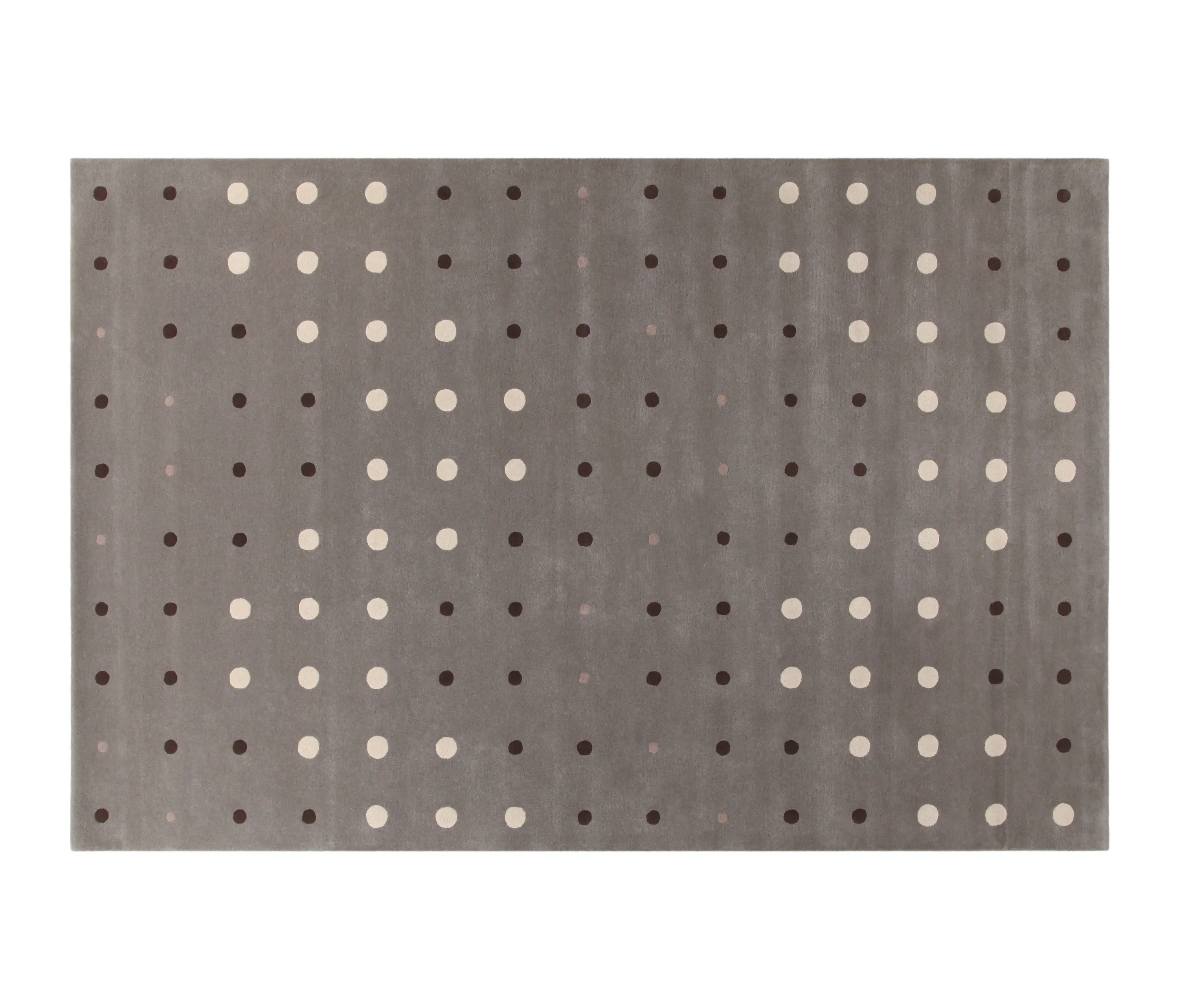
Bubbles JC-1 gray
Teilen
- Startseite/Formatteppiche/
Bubbles JC-1 gray
Über dieses Produkt
Architonic ID: 1503015
Einführungsjahr: 2017
Pile composition
100% blend of New Zealand Wool
Height
18mm
Technique
hand tufted
Origin
India
Finishing
wool pile cut, hand washed and carved
Stock sizes
200x300cm, 250x350cm
Lead time for custom sizes
3-4 months
Konzept
Bubbles
A fun and playful motif of polka dots in the carpet Bubbles, design by modern and ingenious designer Joe Colombo. Bubbles was born from his 1968 graphic design project that Joe Colombo undertook in various areas such as lighting, for example with the Bolle table lamp already in 1964. The pattern is created by circles made of three or four different diameters that create dynamic rhythms and patterns
JOE COLOMBO
Colour gradations, rounded shapes and sinuous lines reflect the futuristic visions of the modern and ingenious designer.
A blend of New Zealand wool varieties, hand tufted and with a FInishing effect that discreetly harks back to a 1960s feel, are the distinguishing features of the carpets from the Joe Colombo Collection. This eclectic mix would have been certainly been to the liking of the brilliant designer, who was always well informed and up-to-date on manufacturing materials and technical details, at least as much as he was also sophisticated, and attentive lover of beauty. The starting point for translating this Milanese architect’s novel, futuristic vision into material, color and knots, had to be digging up some of his most recurrent graphic elements, or particularly representative projects. Thanks to the active participation of Studio Joe Colombo, still active today and headed by architect Ignazia Favata, everything has been examined and reproposed to a di erent scale from the original design, so as to become a piece of furniture in its own right. Bubbles and Isola are the first creations for the Joe Colombo collection, which is currently being developed further. The Isola series reintroduces the graphic design element visible in technical drawings penned by Joe Colombo for the Hoecht stand at the Dusseldorf plastics fair in 1970. The particular color combinations, together with the round shape of the carpet lend to the ensemble an e ect of continuous motion and at the same time of balance.
DESIGN ICONS COLLECTION
Masters. While different with regard to generation, training, experience, and legacy, what unites them is a self-same project: a kind of unfettered, personal quest, indeed, a search for the discovery and development of a dynamic and multifaceted modernity. Masters without limiting their investigation, they have dabbled with all kinds of artistic and technical forms- painting, architecture, design, applied arts, publishing, film and photography. If Gio Ponti, still a 19th century man, was bent on outdoing himself with each passing decade in an all-consuming, playful and eye-catching display of genius, Joe Colombo, whom Ponti held in especially high esteem, was rather a personality who lacked any abiding connection with the past and that’s what makes his artistic visions so prophetic. True blue Milanesi like Ponti and Colombo are o set by small-town artists Ico Parisi and Manlio Rho, with ties to the rationalist movement in Como headed by Giuseppe Terragni. And yet their paths are well marked out, and highly original at that. Whereas Rho conceptualizes his own version of geometric abstraction embellishing it with nature’s colors, Parisi experiments with every aspect of the furnishing project seeking the key to integration with the world of the arts. Amini adopts today these Masters’ great legacy, presenting it with uttermost faithfulness to the originals in a ne collection of carpets.
Dieses Produkt gehört zur Kollektion:

Produktdetails
Dimension
Grösse auf Kundenwunsch
Varianten
1
Zu den Produktseiten dieser Varianten gelangen Sie – einfach anklicken!

Design-Dateien
6
Vertriebspartner
Designer

Joe Colombo
Italy
Joe Colombo war ein italienischer Designer. In seiner kurzen, aber erfolgreichen Karriere produzierte Joe Colombo eine Serie innovativer Objekte, was ihn zu einem der einflussreichsten Produktdesigner Italiens machte. Biografie Joe Colombo Joe Colombo wurde am 30. Juli 1930 in Mailand geboren. Er studierte bis 1949 Malerei an der Kunstakademie Accademia di Brera in Mailand. Anschliessend besuchte Colombo das Polytechnikum in Mailand, um dort bis 1954 Architektur zu studieren. Colombo schloss sich Anfang der 1950er Jahre der Bewegung der Nuklearen Malerei um Enrico Baj und Sergio Dangelo an und stellte seine Arbeiten u.a. in Mailand, Turin, Venedig und Brüssel aus. Um 1962 begann Colombos Karriere als Designer. Innerhalb kürzester Zeit entstanden viele seiner bekannten Entwürfe. Zu dieser Zeit etablierte er auch die Zusammenarbeit mit Herstellern wie, Kartell, Zanotta, Stilnovo, Oluce, Alessi, Rosenthal. 1959 übernahm Joe Colombo nach dem Tod seines Vaters das Familienunternehmen, einen Elektrogerätebetrieb und experimentierte dort mit neuen Konstruktionen und Produktionstechnologien. 1962 gründete er sein eigenes Designstudio in Mailand. Colombo Design Zusammen mit seinem Bruder Gianni Colombo entwickelte Joe Colombo Konzepte prismenförmiger Leuchten, wie für die Acrilica Lamp von 1962. Im Jahr 1963 entstand sein berühmter Elda Sessel. Unter Colombos ersten Entwürfen für den Hersteller Kartell war unter anderem der Chair No. 4801 aus Speerholz von 1967. Die fliessenden Elemente des Stuhls waren Vorreiter seiner späteren Arbeiten mit Plastik, wie der Chair Universale. Des Weiteren kreierte Joe Colombo innovative Entwürfe für Möbel, Leuchten, Glas, Türgriffe und Uhren. Seit Beginn seiner Karriere war Colombo an Wohnsystemen interessiert. Sein modularer Combi-Centre Container von 1963 oder das Additional Living System von 1967 sowie die Tube und Multi Chairs von 1970 sind Beispiele dafür. All diese Objekte spiegeln Colombos zentralen Leitsatz: variable Konfiguarationsmöglichkeiten. Sein modernes Design wurde in Mikro-Wohnwelten integriert. Colombos futuristische Interieurs Visiona 1 wurde deshalb auch auf der Visiona-Exhibition anlässlich der Kölner Möbelmesse von 1969 ausgestellt. Elda Chair von Joe Colombo Joe Colombos Sessel Elda, benannt nach seiner Frau, wurde im Jahr 1963 entworfen und seitdem in Italien produziert. Er gehört zu der Sammlung der wichtigsten Designmuseen weltweit, wie zum Beispiel dem Museum of Modern Art in New York. Neben der Pfeife wurde der Elda Chair schon bald zu Colombos Markenzeichen. Der Sessel aus Fiberglas war einer der ersten in dieser Grössenordnung. Colombos Spider Lamp Joe Colombos bekannteste Leuchte ist die Spider Steh- oder Tischleuchte von 1965 für Oluce. Er gewann mit ihr den Compasso d’Oro. 1972 wurde sie in der Ausstellung „Italy: The New Domestic Landscape“ im MoMA in New York präsentiert. © by Architonic


