When design learns to breathe
Cantori’s Oasi sideboard, designed by Maurizio Manzoni, reimagines furniture as a living system — a union of elegance, craft and environmental intelligence.


Por Cantori y Claire Brodka para

Cantori
noviembre 3, 2025 | 12:00 am CUT
In contemporary design, the home has become both sanctuary and stage, a place that must soothe, perform and signal awareness all at once. Objects are no longer judged purely for their function or beauty but for the narratives they sustain: of sustainability, authenticity and emotional balance. The language of interiors has softened, with curves replacing corners and tactility tempering technology, yet beneath the surface lies a complex tension between genuine innovation and aesthetic tokenism. Today’s most compelling designs navigate this space with honesty, using form not to disguise intention but to reveal it.
Within this shifting landscape, certain works articulate a more reflective kind of modernity. They speak in tones of restraint rather than declaration, translating technical intelligence into atmosphere and mood. The Oasi collection by designer Maurizio Manzoni, created for Italian brand Cantori, is one such expression, and the Oasi sideboard perhaps its most complete statement. Here, craftsmanship, geometry and environmental awareness come together in an object that feels less like furniture and more like a quiet manifesto for contemporary living.
A choreography of curve and precision
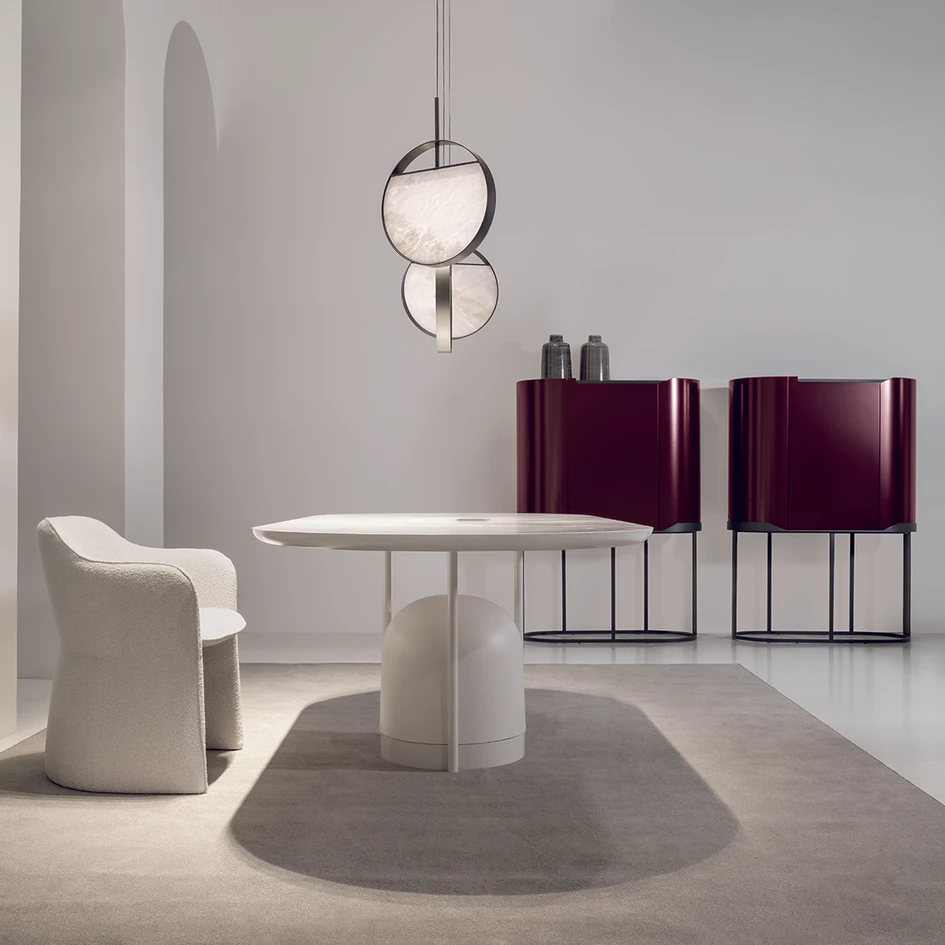
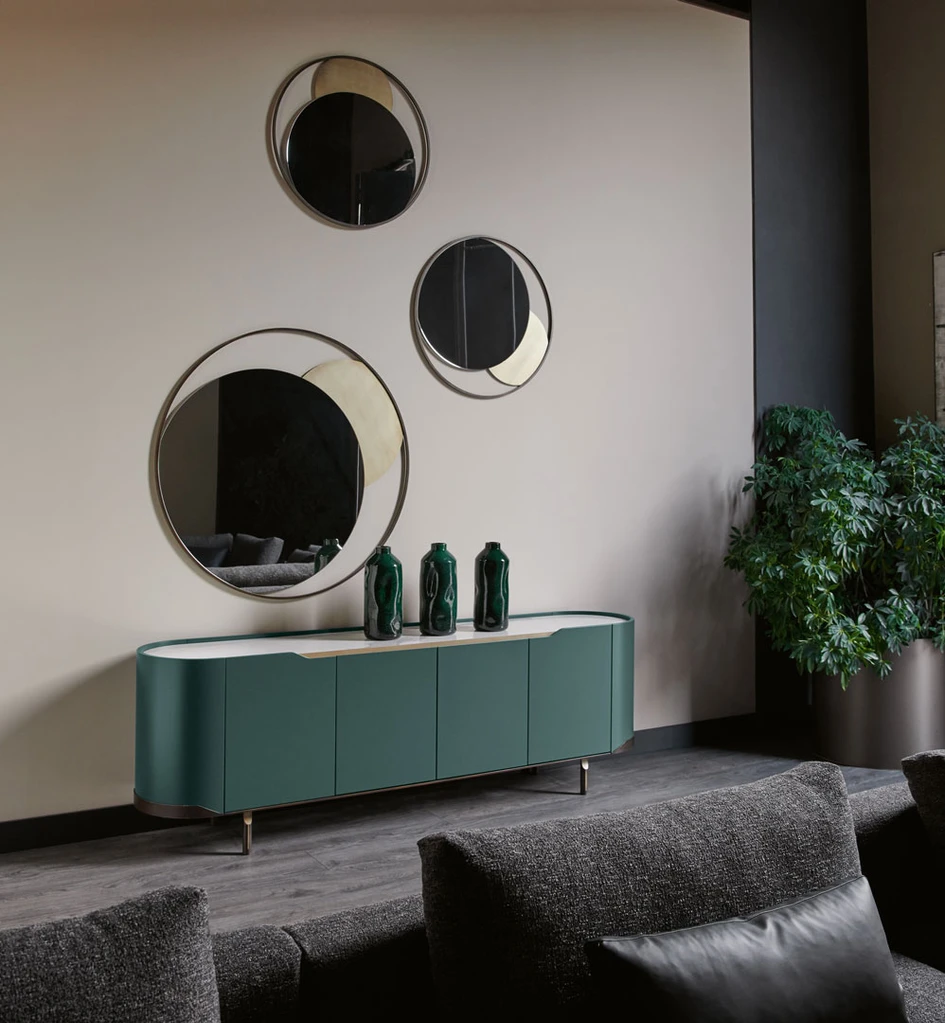
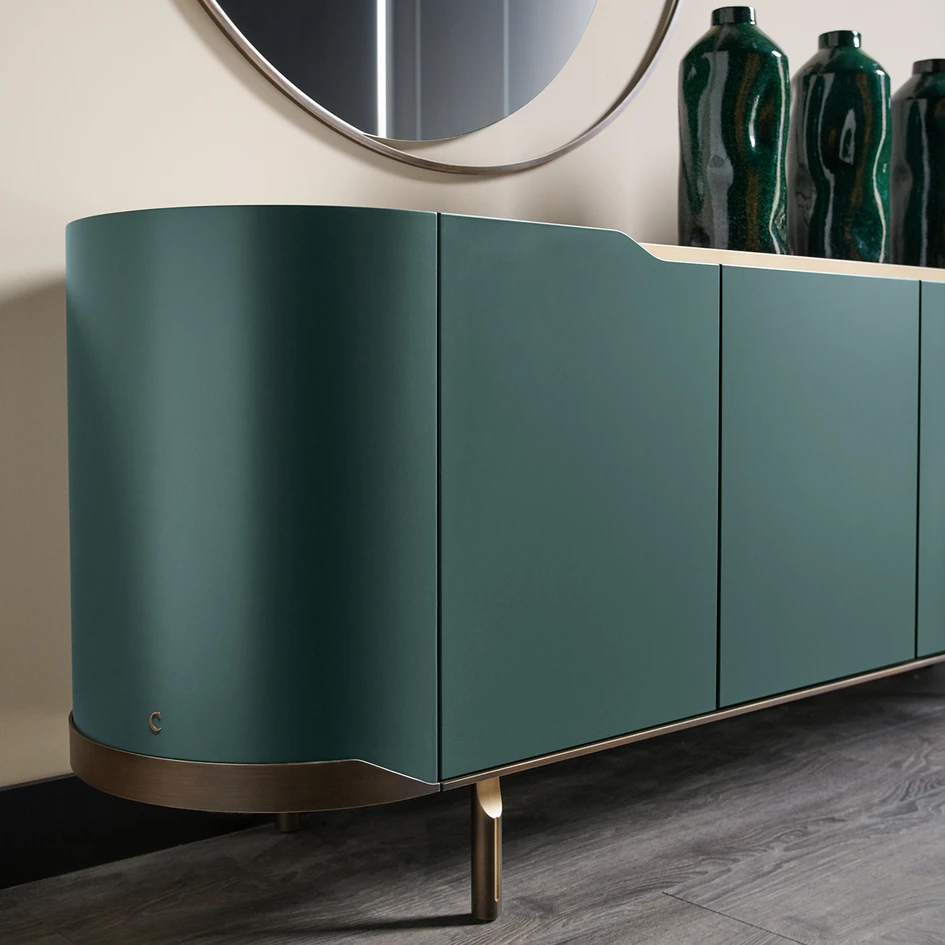
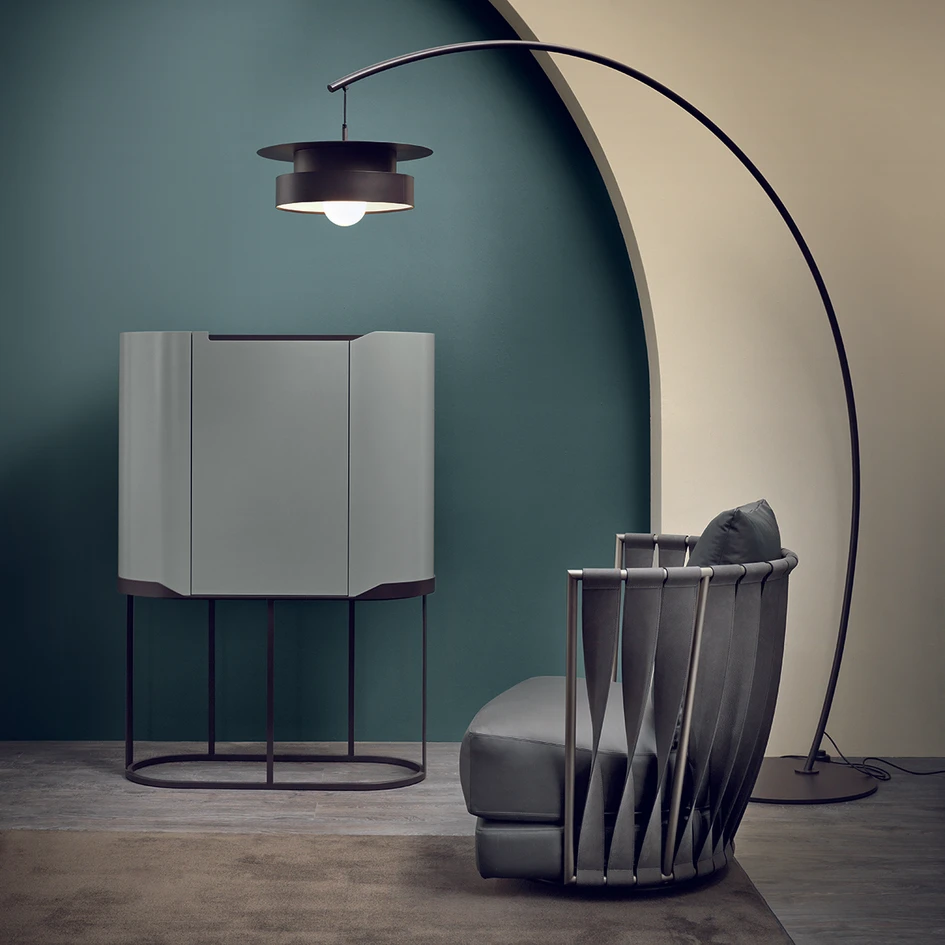
The Oasi sideboard reads as both sculpture and structure. Its defining metal frame sweeps in continuous curves around the wooden body, tracing a fluid architectural line that defines its silhouette. The piece appears to hover lightly above the floor, supported by an elliptical steel base that lends both stability and grace. There is a sense of motion contained within stillness, an equilibrium of forces that gives the sideboard its calm authority.The piece appears to hover lightly above the floor, supported by an elliptical steel base that lends both stability and grace
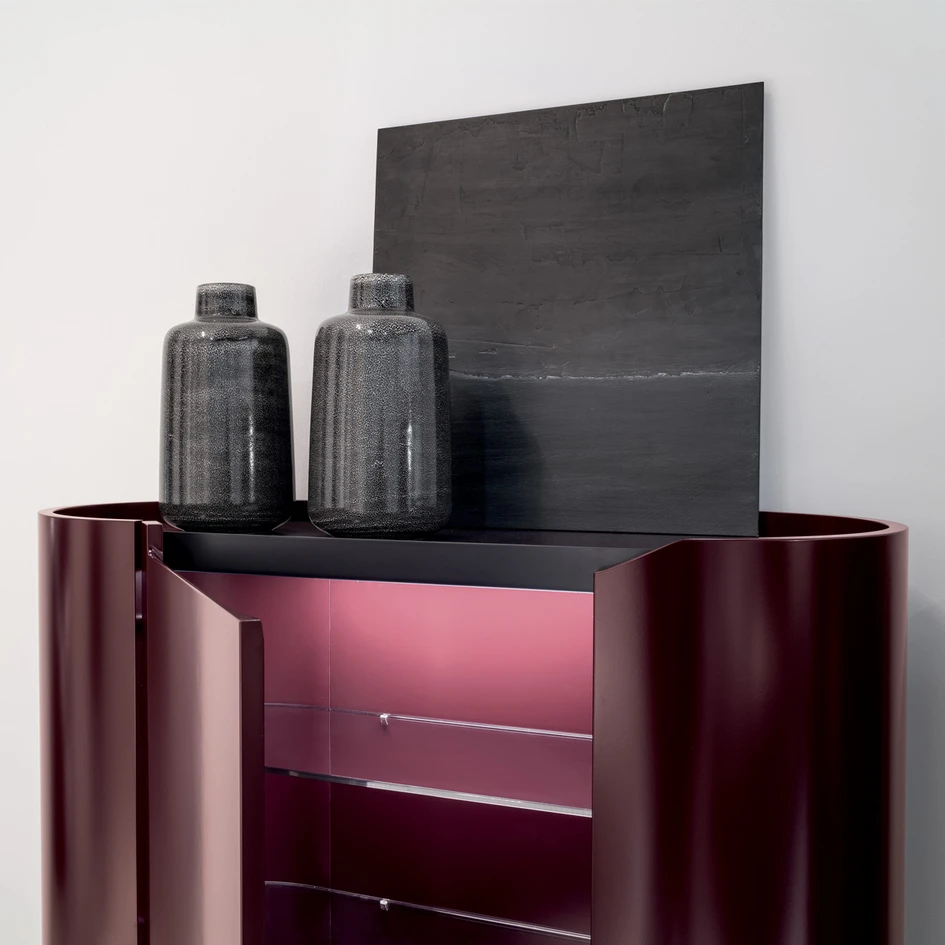
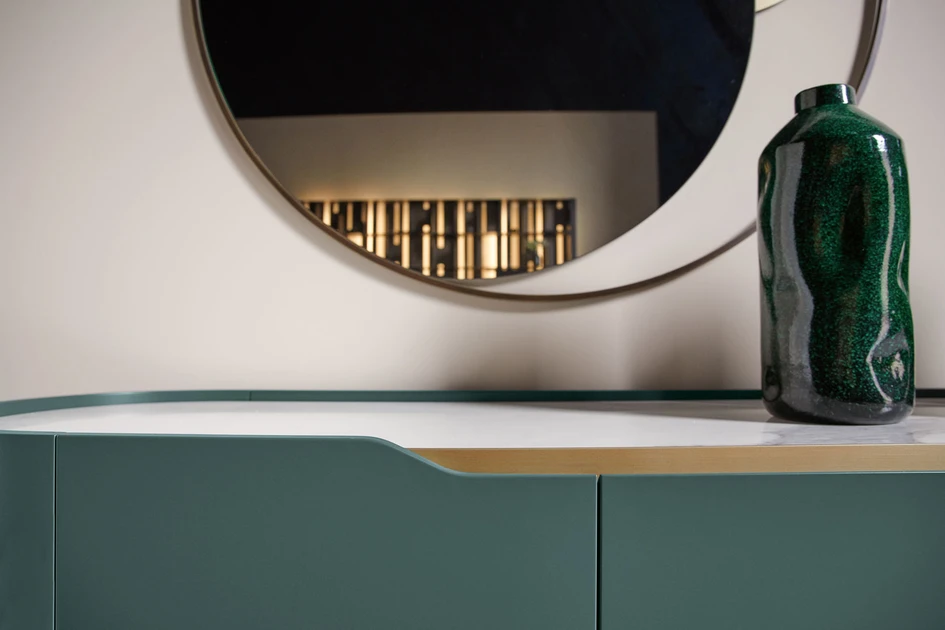
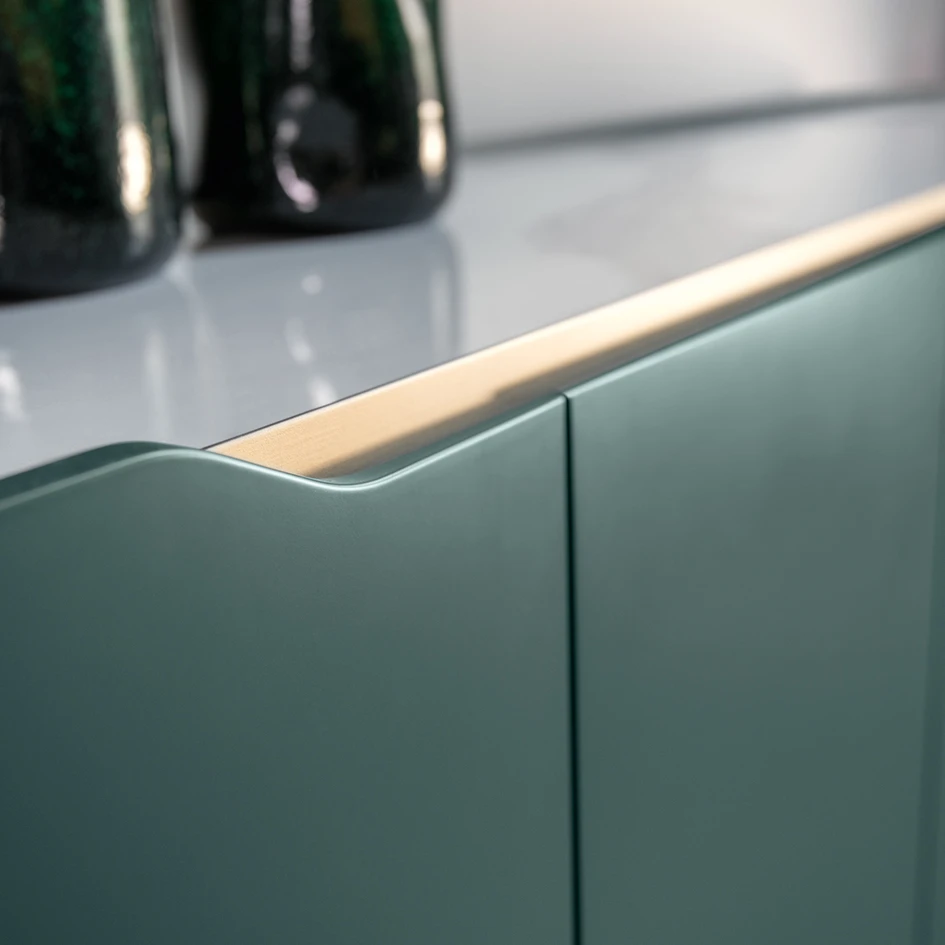
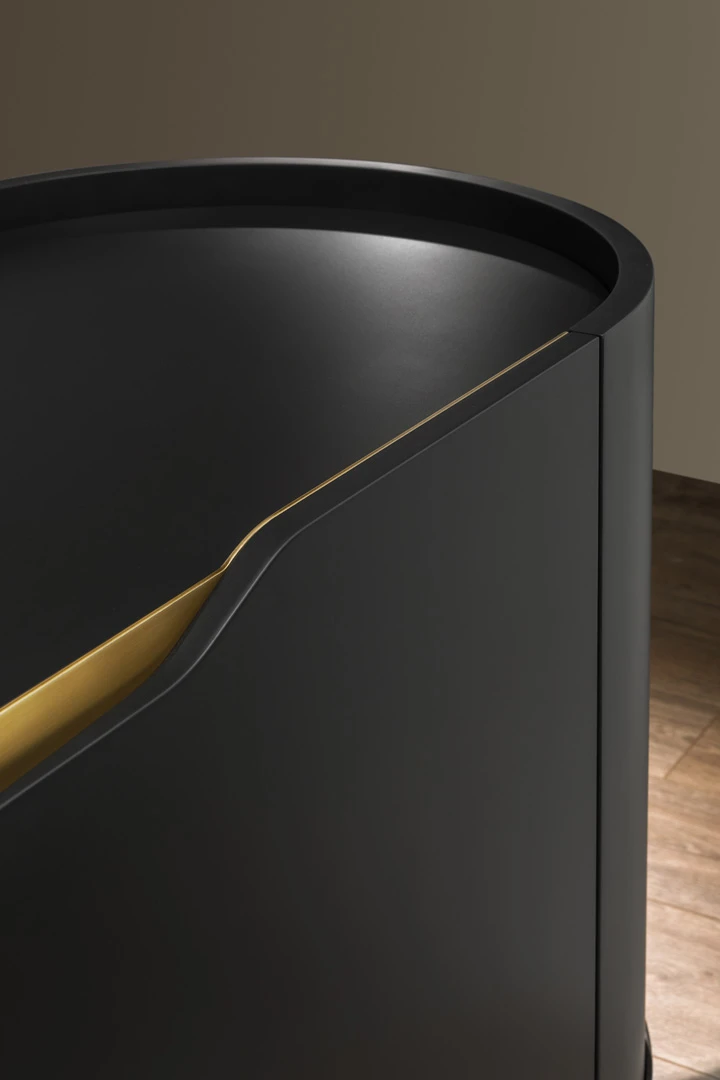
This formal language extends through every detail: curved wooden panels meet seamlessly at the joints, and slim metal inlays punctuate the side doors like precise breaths. The four-door configuration opens with an ergonomic gesture rather than hardware, maintaining the integrity of the surfaces. Inside, a shaped glass shelf with polished edges divides the interior, its supports adjustable yet discreet, a small testament to the brand’s obsession with functional finesse.

Material intelligence and quiet individuality
The Oasi sideboard is built on the principle of balance, not only in structure but in tone. Its top may be realised in wood for coherence and warmth, or finished in marble or stone for tactile contrast. Cantori’s wide range of finishes allows the piece to adapt without losing its identity. Whether rendered in soft metallics or grounded in deep natural hues, Oasi sustains the same visual rhythm: curved, continuous and calm.This is luxury stripped of excess, an approach that prizes longevity over spectacle. In an era when statement pieces too often compete for attention, Oasi anchors a room through quiet clarity. It suggests that serenity itself can be a form of sophistication.
Where design meets biotechnological conscience
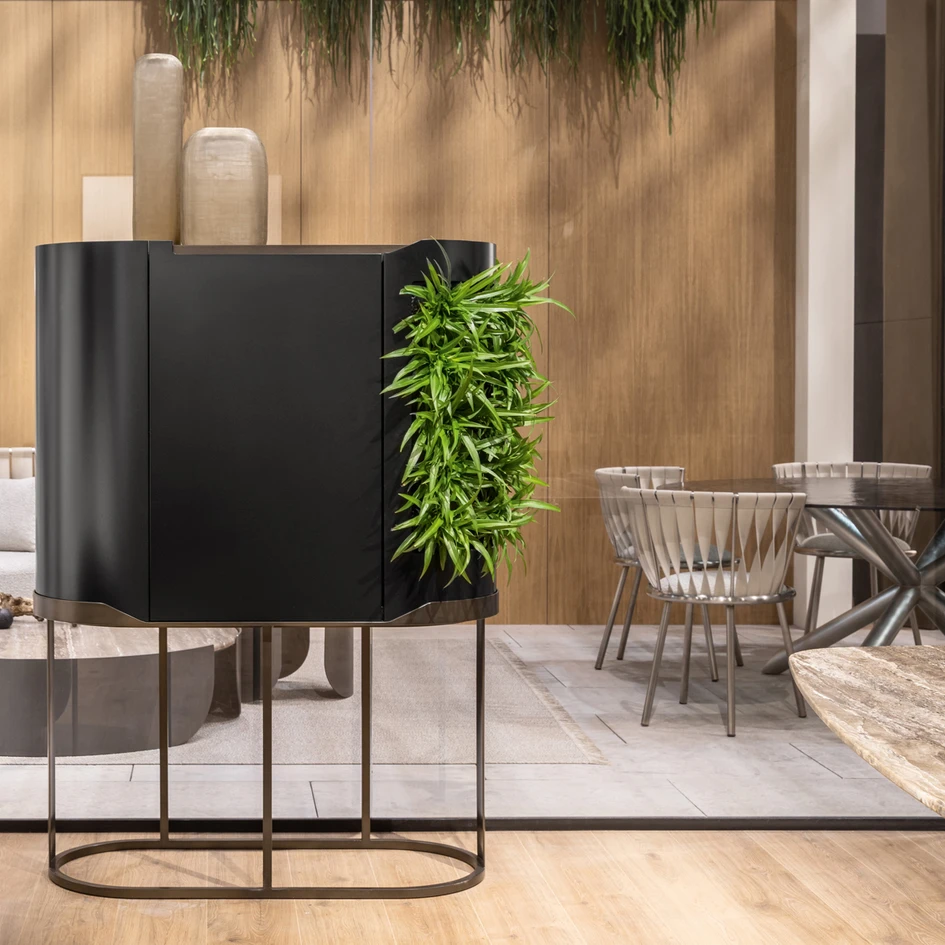
The wider Oasi collection also gestures towards the future of domestic wellbeing. In collaboration with Aura System, a start-up specialising in environmental biotechnologies, Cantori has developed a version of the Oasi cabinet capable of purifying air, capturing CO2 and refreshing interior atmospheres. The result is furniture that quite literally breathes, redefining the boundary between aesthetic object and functional ecosystem.Oasi expresses an understanding that beauty can coexist with responsibility
Although the sideboard does not incorporate this technology directly, it belongs to the same conceptual lineage. Its design expresses an understanding that beauty can coexist with responsibility, and that progress in furniture design lies as much in invisible systems as in visible form.
Towards a more reflective design culture
The Oasi sideboard encapsulates a shift in design’s moral compass, away from surface novelty and towards depth, precision and purpose. It invites a slower kind of looking, where refinement becomes a gesture of care. Cantori’s collaboration with Maurizio Manzoni does more than extend the vocabulary of Italian craftsmanship; it redefines what it means to design for the present moment with intelligence, restraint and empathy. In a culture increasingly attuned to noise, Oasi reminds us that silence too can be a statement.© Architonic
Galería de proyectos